
QR Codes in Preservation – Transforming How We Store Memories
Nearly every American museum and archive now relies on QR codes to connect visitors with deeper stories behind artifacts. As these codes pop up in more collections, they help safeguard and share cultural heritage in powerful new ways. With over 60 percent of museums worldwide using QR technology, preserving history has become faster and more engaging than ever before. This shift is helping secure digital memories and create interactive experiences for everyone who cherishes the past.
Table of Contents
- The Role of QR Codes in Modern Preservation
- Types of Items Preserved With QR Codes
- How Scannable Labels Enable Digital Archiving
- Ensuring Durability and Security of Digital Memories
- Common Pitfalls and Best Practices for QR Code Storage
Key Takeaways
| Point | Details |
|---|---|
| Integration of QR Codes in Preservation | QR codes serve as a bridge between physical artifacts and digital documentation, enhancing cultural heritage preservation. |
| Visitor Engagement Enhancement | Museums are using QR codes to provide interactive experiences, allowing visitors to access rich multimedia content related to exhibits. |
| Diverse Applications | QR codes can be used to document a wide range of items, from historical artifacts to personal memorabilia, ensuring context preservation. |
| Effective Digital Archiving | Scannable labels facilitate quick access to information, improving the efficiency and longevity of digital archiving practices. |
The Role of QR Codes in Modern Preservation
QR codes have emerged as a revolutionary tool in preservation, offering a seamless bridge between physical artifacts and digital documentation. By enabling quick access to detailed historical information, these compact graphic codes are transforming how museums, archives, and collectors maintain and share cultural heritage.
In archaeological contexts, QR codes provide unprecedented capabilities for metadata preservation. Researchers have demonstrated their utility in linking physical artifacts to comprehensive digital records, allowing instant retrieval of critical contextual information. This technological approach ensures that valuable historical details are not lost, even if the original physical item degrades over time.
Museums and cultural institutions are increasingly adopting QR codes as interactive guides that enhance visitor engagement. These digital markers serve as comprehensive informational portals at archaeological sites and exhibits, providing multilayered narratives about artifacts, historical contexts, and preservation techniques. By scanning a simple code, visitors can access detailed multimedia presentations, expert commentaries, and deep historical insights that were previously inaccessible.
The versatility of QR codes extends beyond traditional preservation settings. Artists, collectors, and historians can now attach rich digital stories to physical objects, creating dynamic, interconnected archives that capture not just the item itself, but its entire narrative context. This approach transforms static preservation into an interactive, deeply engaging experience that connects past, present, and future.
Types of Items Preserved With QR Codes
QR codes have become a versatile tool for preserving and documenting a wide range of items across different domains, from historical artifacts to personal keepsakes. Their ability to store comprehensive digital information makes them an invaluable technology for capturing and protecting the context and stories behind physical objects.

In the realm of technological preservation, QR codes offer remarkable capabilities for documenting complex systems and historical innovations. Researchers have successfully encoded intricate software artifacts, such as the Apollo 11 guidance computer code, into compact QR code formats, demonstrating the technology’s potential to preserve critical technological heritage that might otherwise be lost to time.
Archaeological research highlights the extensive use of QR codes in artifact cataloging and preservation, revealing the diverse range of items that can be documented. These items include:
- Museum Artifacts: Historical objects, ancient relics, artwork
- Family Heirlooms: Vintage photographs, inherited jewelry, genealogical records
- Scientific Specimens: Biological samples, geological collections, research artifacts
- Personal Memorabilia: Sports equipment, vintage clothing, travel souvenirs
- Architectural Elements: Historical buildings, architectural plans, restoration documents
The power of QR codes lies in their ability to transform static objects into interactive narratives. By attaching digital layers of information, these small graphic codes ensure that the stories, contexts, and significance of items are preserved and easily accessible to future generations, creating a dynamic bridge between physical artifacts and their rich historical backgrounds.
How Scannable Labels Enable Digital Archiving
Digital archiving has undergone a profound transformation with the introduction of scannable labels, providing an innovative solution for preserving and accessing information across multiple domains. These compact, versatile tools bridge the physical and digital worlds, offering unprecedented capabilities for documenting and retrieving complex information quickly and efficiently.

Researchers have developed sophisticated applications that leverage QR codes for comprehensive data management systems, demonstrating how scannable labels can revolutionize digital archiving processes. By encoding extensive metadata into a simple graphic, organizations can now capture and store intricate details about artifacts, documents, and collections with remarkable precision.
Archaeological research further validates the potential of scannable labels in creating robust digital preservation frameworks, highlighting their critical role in modern archival practices. The key advantages of digital archiving through scannable labels include:
- Instant Information Access: Rapid retrieval of comprehensive historical and contextual data
- Compact Storage: Massive amounts of information stored in minimal physical space
- Metadata Richness: Ability to attach multimedia, text, and complex documentation
- Preservation Longevity: Protecting information beyond physical artifact limitations
- Cross Platform Compatibility: Seamless integration with digital systems and devices
By transforming static objects into dynamic, information rich resources, scannable labels represent a breakthrough in how we capture, store, and transmit knowledge across generations. These intelligent tags are not just preservation tools but gateways to deeper understanding, connecting physical artifacts with their complete historical and contextual narratives.
Ensuring Durability and Security of Digital Memories
Preserving digital memories requires sophisticated strategies that go beyond simple digital storage, encompassing robust techniques for long-term information retention and protection. The evolving landscape of digital preservation demands innovative approaches that can withstand technological changes and potential data degradation.
Researchers have developed groundbreaking frameworks like Permanent Data Encoding (PDE), a visual language designed to ensure long-term knowledge preservation, addressing critical challenges in maintaining the integrity of digital memories. This approach represents a significant leap in creating sustainable methods for protecting invaluable historical and personal information across generations.
Advanced technological methods now offer enhanced scanning robustness and aesthetic improvements for digital encoding systems, providing multiple layers of security and accessibility. The key considerations for ensuring durability and security include:
- Physical Resilience: Creating QR codes that withstand environmental challenges
- Data Encryption: Implementing advanced security protocols
- Redundancy Strategies: Developing multiple backup mechanisms
- Format Compatibility: Ensuring long-term readability across evolving technologies
- Metadata Preservation: Maintaining contextual information alongside digital memories
The future of digital memory preservation lies in intelligent, adaptive systems that can protect and transmit our most cherished stories. By combining cutting-edge technological innovations with thoughtful archival strategies, we can create digital legacies that transcend current technological limitations, ensuring that our memories remain vivid, accessible, and protected for future generations.
Common Pitfalls and Best Practices for QR Code Storage
QR code storage is a nuanced process that requires careful consideration of design, functionality, and long-term preservation strategies. While these compact graphic codes offer remarkable potential for information storage, users must navigate several critical challenges to ensure optimal performance and reliability.
Researchers have developed sophisticated methods for generating scanning robust QR codes that balance visual aesthetics with technical reliability, addressing key challenges in QR code design and implementation. Understanding these technical subtleties can significantly improve the effectiveness of digital storage solutions.
Advanced technological approaches now provide enhanced strategies for creating QR codes with superior scanning capabilities, revealing important best practices for users. The most critical considerations include:
- Design Integrity: Maintaining clear contrast and appropriate sizing
- Environmental Durability: Protecting codes from physical damage
- Error Correction: Implementing robust information recovery mechanisms
- Scanning Compatibility: Ensuring readability across multiple devices
- Information Density: Balancing data volume with code complexity
Successful QR code storage requires a strategic approach that anticipates potential technical challenges. By understanding and implementing these best practices, users can transform these simple graphic codes into powerful, reliable tools for preserving and accessing critical information across various contexts and environments.
Preserve Your Memories with Smart QR Code Labels from Smack Tags
The article highlights the challenge of preserving detailed historical and personal information linked to physical objects while ensuring long-term durability and easy access. Many readers want a simple solution to create interactive, scannable labels that carry rich digital stories without worrying about fading, damage, or losing context. Key pain points such as data security, environmental resilience, and the need for user-friendly digital archiving resonate deeply with collectors, artists, and families alike.
Smack Tags offers the perfect solution to transform your cherished items into living archives. Our durable, water-resistant QR code labels let you attach videos, images, and notes to everything from family heirlooms to artwork. Designed for ease with no app required, these labels enable quick retrieval of memories and important information. You can explore creative ways to preserve your stories by visiting Creative – Smack Tags and discover practical storage options in our Uncategorized – Smack Tags collection.
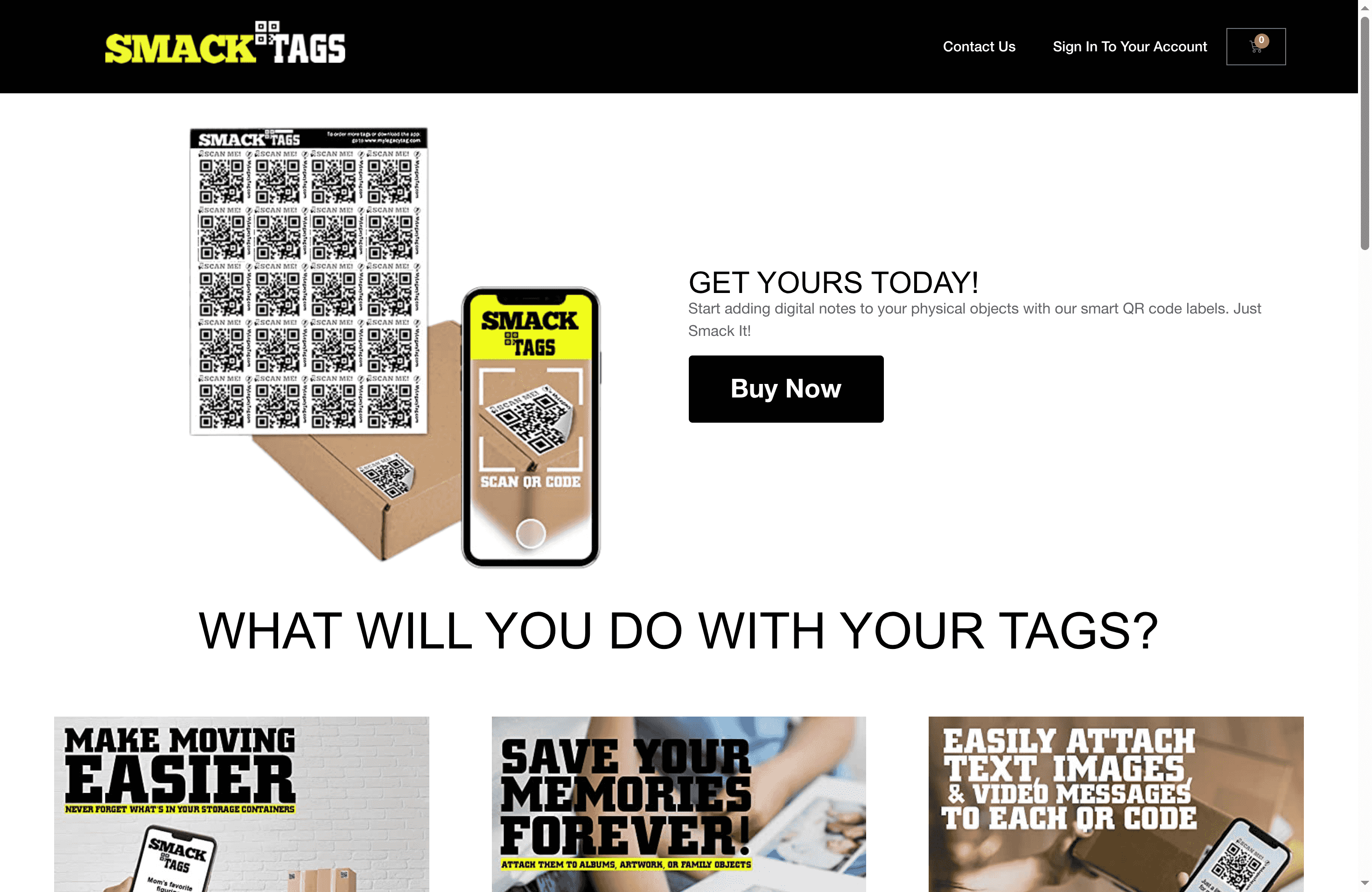
Start securing your personal and business memories today with Smack Tags. Visit smacktags.com to get your set of 20 QR code labels and enjoy seamless year-round digital storage with our affordable subscription. Don’t wait for memories to fade. Preserve your stories now with a trusted, innovative approach.
Frequently Asked Questions
What are QR codes and how are they used in preservation?
QR codes are compact graphic codes that link physical artifacts to digital documentation. They enable quick access to historical information, helping museums, archives, and collectors preserve cultural heritage effectively.
What types of items can QR codes be used to preserve?
QR codes can be used for a variety of items including museum artifacts, family heirlooms, scientific specimens, personal memorabilia, and architectural elements. They work by attaching rich digital narratives to these physical objects, enhancing their preservation.
How do QR codes enhance visitor engagement in museums?
QR codes act as interactive guides at museum exhibits and archaeological sites. Visitors can scan these codes to access multimedia presentations, expert commentaries, and detailed historical insights, making the experience more engaging and informative.
What are the best practices for ensuring QR code durability and security?
To ensure QR code durability and security, it’s important to maintain design integrity, protect codes from physical damage, implement error correction mechanisms, ensure scanning compatibility, and balance information density. These practices help preserve the QR codes for long-term use.
Recommended
- Complete Guide to QR Codes in Storage Solutions – Smack Tags
- Role of QR Codes in Recordkeeping: Complete Guide – Smack Tags
- How QR Codes Support Creativity in Daily Life – Smack Tags
- Role of QR Codes in Museums: Boosting Interaction and Access – Smack Tags
- 7 Tips for Exciting Photography Scavenger Hunts – The Zoofamily