
Complete Guide to QR Codes in Storage Solutions
More than 11 million QR codes get scanned every day, powering everything from restaurant menus to secure asset management. As storage needs grow more complex, these digital squares are reshaping how people organize and access important information. Whether you are archiving family treasures or managing business inventory, this guide reveals how QR codes unlock smarter storage and turn everyday items into interactive, multimedia resources.
Table of Contents
- Defining QR Codes for Storage Solutions
- Types of QR Code Storage Applications
- How QR Code-Enabled Storage Systems Work
- Benefits and Security Features Explained
- Cost, Limitations, and Common Mistakes
Key Takeaways
| Point | Details |
|---|---|
| Versatile Applications | QR codes enhance storage solutions across personal, artistic, and professional domains through multimedia and real-time tracking capabilities. |
| Security Considerations | Users must remain vigilant about security risks such as QR spoofing and prioritize the use of verified scanning technologies. |
| Cost-Effective Solutions | Implementing QR code systems is financially efficient but requires careful planning and device compatibility awareness. |
| Narrative Enhancement | QR codes allow for rich storytelling through the preservation of comprehensive item histories and multimedia documentation. |
Defining QR Codes for Storage Solutions
QR codes represent a powerful digital storage and organization technology that transforms how we track, manage, and preserve information. According to Wikipedia, QR codes are two-dimensional barcodes designed to store diverse information types through a matrix of black and white squares. These compact digital markers can encode numeric, alphanumeric, binary, and even kanji characters, making them incredibly versatile for storage applications.
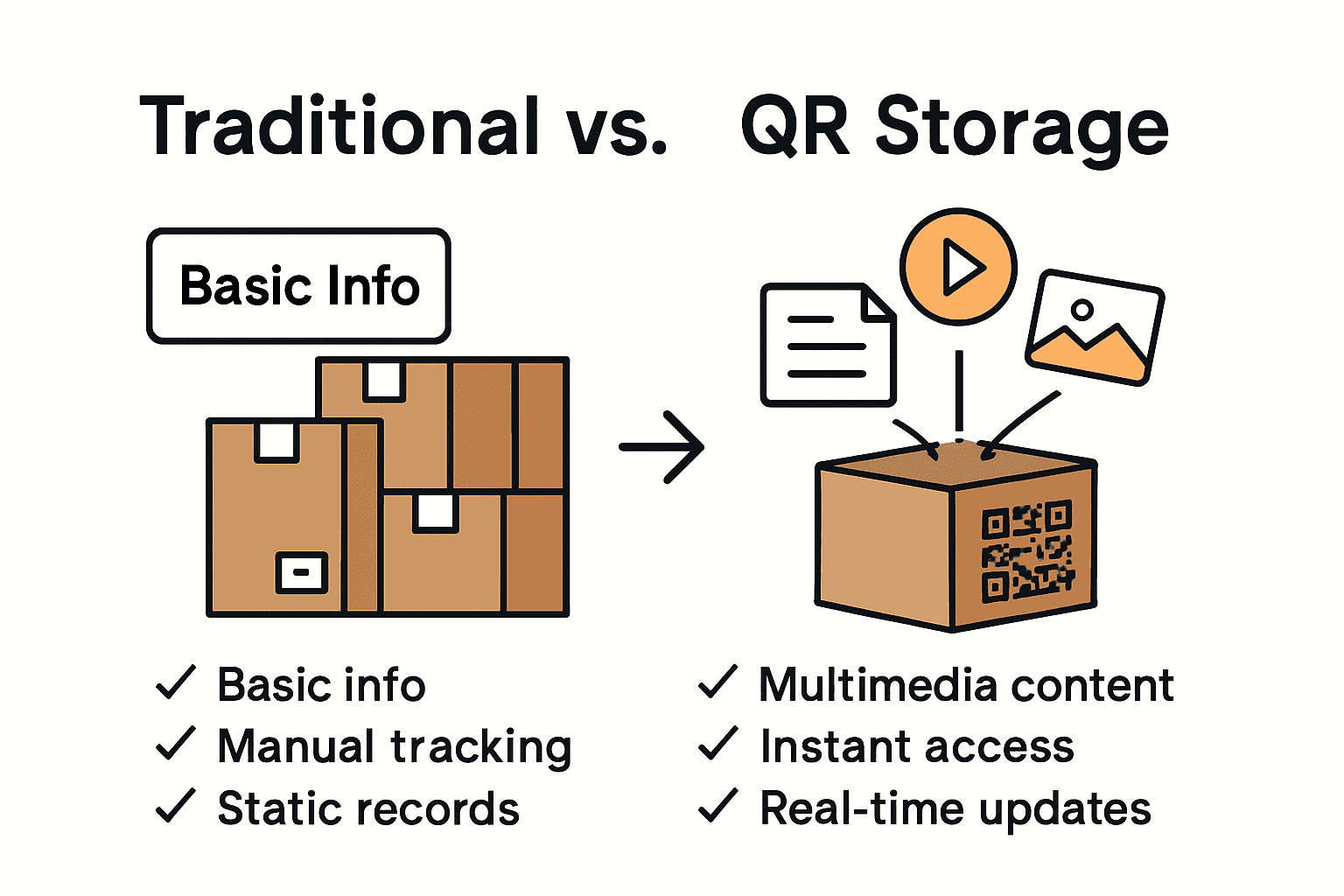
In storage solutions, QR codes serve as intelligent digital tags that bridge physical items with rich multimedia information. Unlike traditional labels, these smart codes allow you to attach comprehensive details like images, videos, text descriptions, and maintenance records directly to objects. A family heirloom, for instance, could have a QR code revealing its entire history – where it was purchased, who originally owned it, and special memories associated with the item.
For artists and crafters, QR codes offer unprecedented organizational flexibility. Wikipedia notes that variations like Rectangular Micro QR Codes even allow encoding information in space-constrained areas, perfect for labeling small craft supplies or documenting intricate project details. These smart labels can transform storage from a mundane task into an interactive, storytelling experience.

Key benefits of using QR codes in storage include:
- Instant access to comprehensive item information
- Multimedia documentation capabilities
- Space-efficient digital tracking
- Preservation of stories and memories
- Durable and water-resistant identification
For more insights into organizing with these innovative tools, check out our guide to organizing with QR codes.
Types of QR Code Storage Applications
QR codes have revolutionized storage solutions across multiple domains, offering versatile applications that go far beyond traditional labeling methods. From personal collections to professional archives, these smart digital markers can transform how we organize and access information.
In personal storage, QR codes become powerful memory preservation tools. Imagine creating a digital scrapbook where family heirlooms, vintage photographs, and cherished keepsakes come alive with multimedia stories. Artists and crafters can use these codes to document project histories, attach tutorial videos to handmade items, or track the provenance of unique creations. Each QR code becomes a narrative gateway, connecting physical objects with rich, contextual information.
Professional and business storage applications are equally compelling. Warehouses can streamline inventory management by embedding QR codes on shelves and containers, enabling instant tracking of product details, manufacturing dates, and location histories. Museums and archival institutions can use these codes to provide visitors with comprehensive background information about artifacts, while healthcare facilities can track medical equipment maintenance records with unprecedented precision.
Key storage applications include:
- Personal memorabilia documentation
- Art and craft project tracking
- Home and office inventory management
- Equipment maintenance logging
- Collection and archive management
- Asset tracking for businesses
For more comprehensive insights into how QR codes transform information access, explore our guide to information access via QR codes.
How QR Code-Enabled Storage Systems Work
QR code storage systems transform traditional inventory management by creating intelligent, interconnected digital tracking networks. At their core, these systems convert physical objects into dynamically accessible digital resources, bridging the gap between tangible items and rich, comprehensive information repositories.
The fundamental mechanism involves encoding unique identifiers and metadata directly into QR codes. When scanned with a smartphone or specialized reader, these codes instantly retrieve associated digital information. For artists and crafters, this might mean accessing project tutorials, material specifications, or creation dates. In professional settings, a single scan can reveal an item’s complete lifecycle – from manufacturing details to maintenance history, current location, and operational status.
Implementing a QR code storage system involves several strategic steps. First, each item receives a unique QR code label containing encrypted data. This label serves as a digital passport, storing everything from basic identification to complex contextual information. Scanning technologies have become increasingly sophisticated, allowing rapid, precise information retrieval across diverse environments. Museums can track artifact provenance, warehouses can monitor inventory in real-time, and personal collections can preserve intricate narratives behind cherished possessions.
Key components of QR code storage systems include:
- Unique digital identifiers
- Multimedia information storage
- Real-time tracking capabilities
- Instant information retrieval
- Scalable data management
- Cross-platform compatibility
For a deeper understanding of how these digital markers store and transmit information, explore our guide to how QR codes store information.
Benefits and Security Features Explained
QR codes offer an innovative approach to storage and information management, combining powerful functionality with potential security considerations. According to Fortinet, these digital markers provide quick data access while simultaneously presenting unique security challenges that users must understand and navigate.
The benefits of QR code storage systems are multifaceted. They enable instantaneous information retrieval, allowing artists, crafters, and professionals to access complex metadata with a simple smartphone scan. Multimedia capabilities mean that each QR code can store far more than traditional labels – embedding videos, maintenance histories, personal stories, and comprehensive documentation directly into a compact visual format. This transforms mundane storage from a static record-keeping exercise into an interactive, rich storytelling experience.
However, security remains a critical consideration. As Fortinet highlights, QR codes can be vulnerable to malicious tactics like QR spoofing, where bad actors might create deceptive codes that redirect users to harmful websites. Mitigating these risks requires a combination of user awareness, robust scanning technologies, and strategic implementation practices that prioritize data integrity and user protection.
Key security and benefit considerations include:
- Instant multimedia information access
- Compact, versatile digital storage
- Potential vulnerability to malicious code injection
- Need for verified scanning platforms
- Rich narrative preservation capabilities
- Cross-platform compatibility
To enhance your understanding of secure QR code implementations, explore our guide to QR codes for information access.
Cost, Limitations, and Common Mistakes
QR code storage solutions present a fascinating blend of innovative technology and practical challenges. According to Fortinet, while these digital markers are cost-effective and easy to implement, they come with specific limitations that users must carefully navigate to ensure optimal performance and security.
From a financial perspective, QR code systems offer remarkable value. They eliminate expensive traditional labeling methods, reduce manual inventory tracking, and provide a scalable solution for artists, crafters, and professionals seeking efficient storage management. However, the true cost extends beyond monetary considerations. Implementation requires strategic planning, understanding of potential technological barriers, and a comprehensive approach to digital information management.
Technological limitations can significantly impact QR code effectiveness. Fortinet highlights critical challenges, including the fact that not all devices have native scanning capabilities, which can create accessibility barriers. Additionally, QR code vulnerability remains a concern, with potential risks like code spoofing that could compromise user security. These limitations underscore the importance of selecting robust QR code platforms and maintaining vigilant implementation strategies.
Common mistakes to avoid include:
- Overlooking device compatibility
- Neglecting security protocols
- Using low-resolution or poorly printed codes
- Failing to update linked digital content
- Ignoring user experience design
- Underestimating maintenance requirements
For a comprehensive exploration of secure QR code implementations, check out our guide to smart storage labeling.
Transform Your Storage Experience Today with Smart QR Solutions
Struggling to keep track of your personal treasures or business inventory like detailed in the “Complete Guide to QR Codes in Storage Solutions”? You are not alone in facing the challenges of organizing complex information, preserving stories, and accessing vital details instantly. These specific pain points call for reliable, digital labeling that goes beyond simple tags. By integrating smart QR code labels, you unlock instant multimedia access, space-saving digital records, and secure storage that preserves memories and operational data with ease.
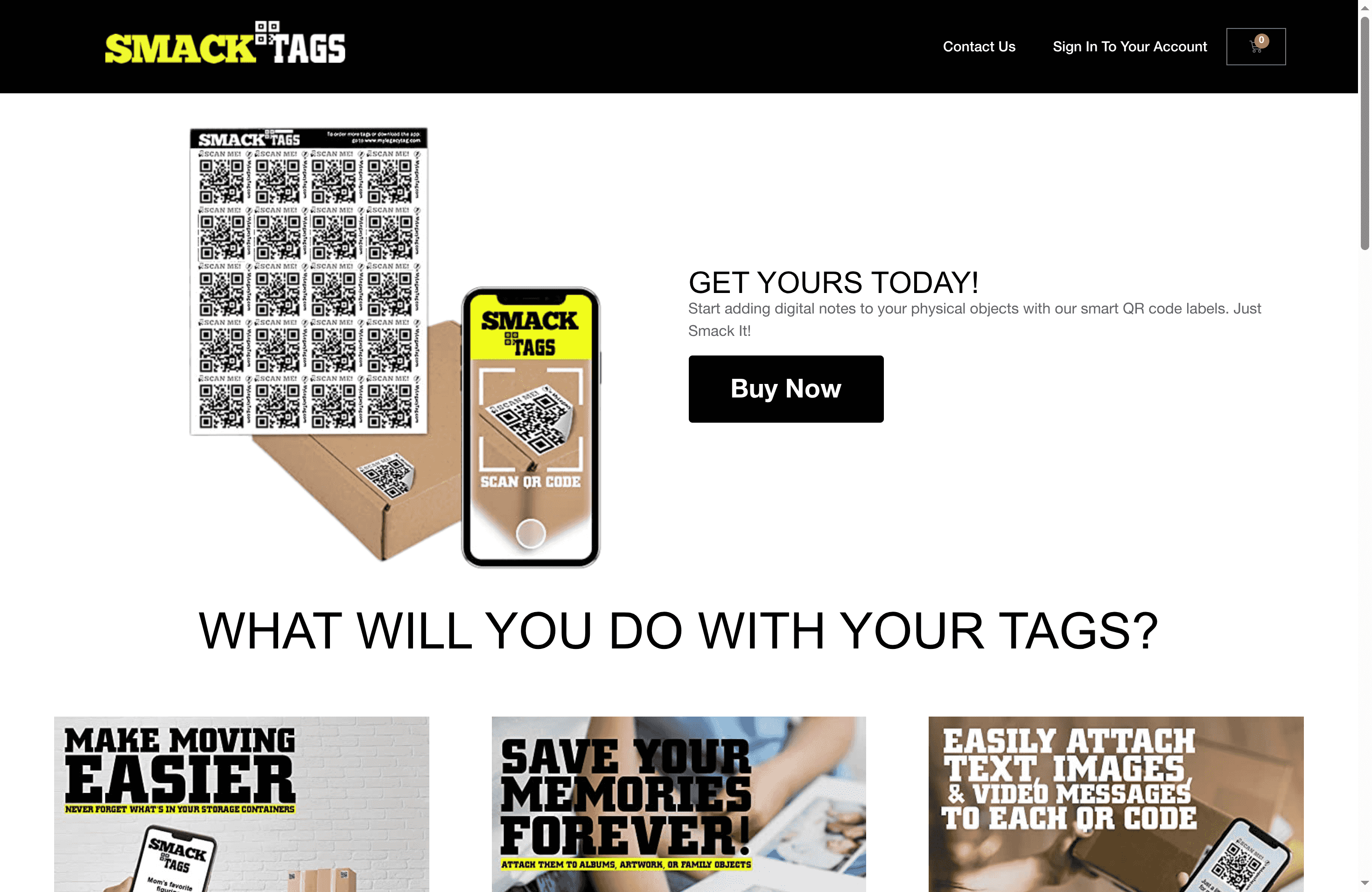
Discover how you can simplify your storage needs with the innovative labels from Creative – Smack Tags. Our QR code stickers are durable, water resistant, and designed to hold videos, text, and images linked directly to each item. No app needed. Perfect for everything from family heirlooms to office inventory, these smart labels help you stop relying on paper and start building a visual inventory that is organized and interactive. Visit Smack Tags now to get your set of 20 labels and enjoy a subscription service that stores your data securely for less than the cost of two cups of coffee. Make your storage intuitive and beautiful today.
Frequently Asked Questions
What are QR codes and how are they used in storage solutions?
QR codes are two-dimensional barcodes that store various types of information through a matrix of black and white squares. In storage solutions, they act as digital tags that link physical items to rich multimedia information, allowing for enhanced tracking and management.
What are the benefits of using QR codes in inventory management?
Using QR codes in inventory management offers numerous benefits, including instant access to comprehensive item information, multimedia documentation capabilities, efficient space utilization for tracking, and the preservation of stories and memories associated with items.
How do QR code-enabled storage systems work?
QR code-enabled storage systems work by encoding unique identifiers and metadata in QR codes. When scanned, these codes retrieve associated digital information, allowing users to quickly access details about an item’s lifecycle, project resources, and maintenance records.
What potential security issues should users consider when using QR codes?
Users should be aware of potential security concerns with QR codes, such as QR spoofing, where malicious codes could redirect users to harmful websites. It’s important to use verified scanning technologies and remain vigilant in maintaining security protocols.