
How QR Codes Support Creativity in Daily Life
Over half of American adults have scanned a QR code in the past year, highlighting just how seamlessly this small technology has woven into daily life. From making quick payments to accessing multimedia art displays, QR codes have become a staple for convenience and creativity. Whether you are curious about their origins or looking to explore new ways to use them, understanding their evolving potential can open up dynamic possibilities.
Table of Contents
- Defining QR Codes and Their Core Uses
- Customization Options for Creative Expression
- Enabling Storytelling and Memory Preservation
- Practical Applications for Artists and Crafters
- Cost, Privacy, and Durability Considerations
- Avoiding Mistakes With QR Code Labels
Key Takeaways
| Point | Details |
|---|---|
| Core Functionality | QR codes are versatile tools for quickly accessing and sharing information, supporting various data types like URLs and multimedia. |
| Customization Potential | QR codes can be artistically modified to enhance visual appeal while maintaining functionality, allowing for personal and brand expression. |
| Storytelling Enhancement | QR codes facilitate innovative storytelling by linking physical objects to rich digital narratives, enhancing memory preservation. |
| Best Practices for Use | It is crucial to ensure high-contrast designs, test scanning capabilities, and regularly audit linked content to avoid usage errors and security risks. |
Defining QR Codes and Their Core Uses
QR codes, or Quick Response codes, are sophisticated two-dimensional barcodes that revolutionize information storage and sharing. Originally developed in 1994 by Denso Wave for tracking automotive parts, these compact visual markers have evolved into versatile communication tools used across multiple industries. QR codes store information through a precise arrangement of black and white squares that can be instantly decoded by digital devices.
At their core, QR codes serve as powerful digital bridges, transforming static objects into interactive information portals. They can encode diverse data types including website URLs, contact details, plain text, and even complex multimedia content. Users simply point their smartphone camera at the code, and instantaneous access to digital information becomes possible. This seamless technology enables quick information retrieval without manual typing or searching.
The practical applications of QR codes span numerous creative and functional domains. Businesses leverage them for marketing campaigns, product tracking, and customer engagement. Artists and crafters use QR codes to attach digital narratives to physical artwork, creating multilayered storytelling experiences. Educational institutions embed them in textbooks and exhibits to provide supplementary digital content. From museum installations to personal photo albums, QR codes for information access offer an innovative way to connect physical and digital worlds, making information sharing more dynamic and interactive.
Key characteristics that make QR codes uniquely powerful include:
- Rapid scanning capabilities
- High data storage capacity
- Compatibility with most modern smartphones
- Ability to function in various lighting conditions
- Durability across different physical environments
Whether used for professional documentation, personal memory preservation, or creative expression, QR codes represent a versatile technology that continues to expand how we communicate and share information in our increasingly digital world.
Customization Options for Creative Expression
QR codes have transcended their original functional purpose, emerging as a canvas for artistic and personal expression. Recent technological innovations now enable creators to transform these digital markers into visually stunning and meaningful design elements. Personalized QR codes in crafting have opened up exciting possibilities for artists and designers to merge digital functionality with creative aesthetics.
Advanced research has revealed groundbreaking techniques for customizing QR codes while maintaining their core scanning capabilities. Innovative design frameworks now allow artists to integrate personal elements like facial features directly into QR code structures without compromising their digital readability. These creative customization methods enable individuals to embed personal stories, artistic styles, and unique visual signatures into what was once a purely utilitarian graphic element.
The customization spectrum for QR codes is remarkably broad, ranging from subtle design modifications to elaborate artistic transformations. Designers can experiment with color palettes, incorporate graphical elements, integrate brand logos, and even create thematic designs that reflect specific moods or narratives. Emerging technologies like diffusion-based generation techniques now make it possible to generate visually compelling QR codes that are both aesthetically pleasing and functionally robust, expanding the boundaries of digital and physical design interaction.
Key customization approaches for creative QR code expression include:
- Color palette modifications
- Integrated graphical overlays
- Brand logo embeddings
- Thematic design variations
- Artistic texture implementations
Whether used for personal art projects, professional branding, or storytelling, customized QR codes represent a fascinating intersection of technology and creativity, transforming simple digital markers into expressive visual communication tools.
Enabling Storytelling and Memory Preservation
QR codes have emerged as powerful tools for preserving and sharing personal narratives, transforming how we document and communicate family histories and cherished memories. Preserving your family’s memories has become more innovative and interactive with these digital storytelling technologies, allowing individuals to capture and share rich, multimedia experiences beyond traditional methods.

Innovative applications of QR codes in memory preservation have expanded dramatically. Embedding personal images into QR codes now enables individuals to create deeply personal digital memorials and storytelling platforms. Perhaps most poignantly, these technologies have been used to create digital tombstone memorials, where visitors can scan a code to access comprehensive biographical information, photographs, and personal tributes, ensuring that personal stories continue to be shared and remembered.
The versatility of QR codes in storytelling extends across multiple domains. Families can attach these codes to physical photo albums, creating interactive experiences where scanning reveals additional context, audio recordings, or video memories. Museums and historical institutions can use QR codes to provide deeper narratives about artifacts, while artists can transform personal memorabilia into interactive storytelling devices. Each QR code becomes a gateway to a richer, more nuanced narrative that transcends traditional static documentation.
Key ways QR codes support storytelling and memory preservation include:
- Attaching multimedia narratives to physical objects
- Creating interactive family history archives
- Preserving personal stories for future generations
- Providing context for historical artifacts
- Enabling dynamic, evolving personal narratives
Through these innovative digital technologies, QR codes are reimagining how we capture, share, and preserve our most meaningful personal stories, bridging physical and digital memories in unprecedented ways.
Practical Applications for Artists and Crafters
QR codes have become transformative tools for artists and crafters, offering innovative ways to enhance creativity, documentation, and audience engagement. Practical QR code uses for artists have expanded far beyond simple information sharing, becoming integral to artistic expression and interactive design experiences.
Aesthetic QR code generation has revolutionized how artists incorporate digital elements into their work. Scanning-robust aesthetic techniques now enable creators to seamlessly integrate functional QR codes into artistic designs without compromising visual integrity. These advanced methods allow artists to embed digital content within paintings, sculptures, mixed media installations, and craft projects, creating multilayered experiences that bridge physical and digital creative spaces.
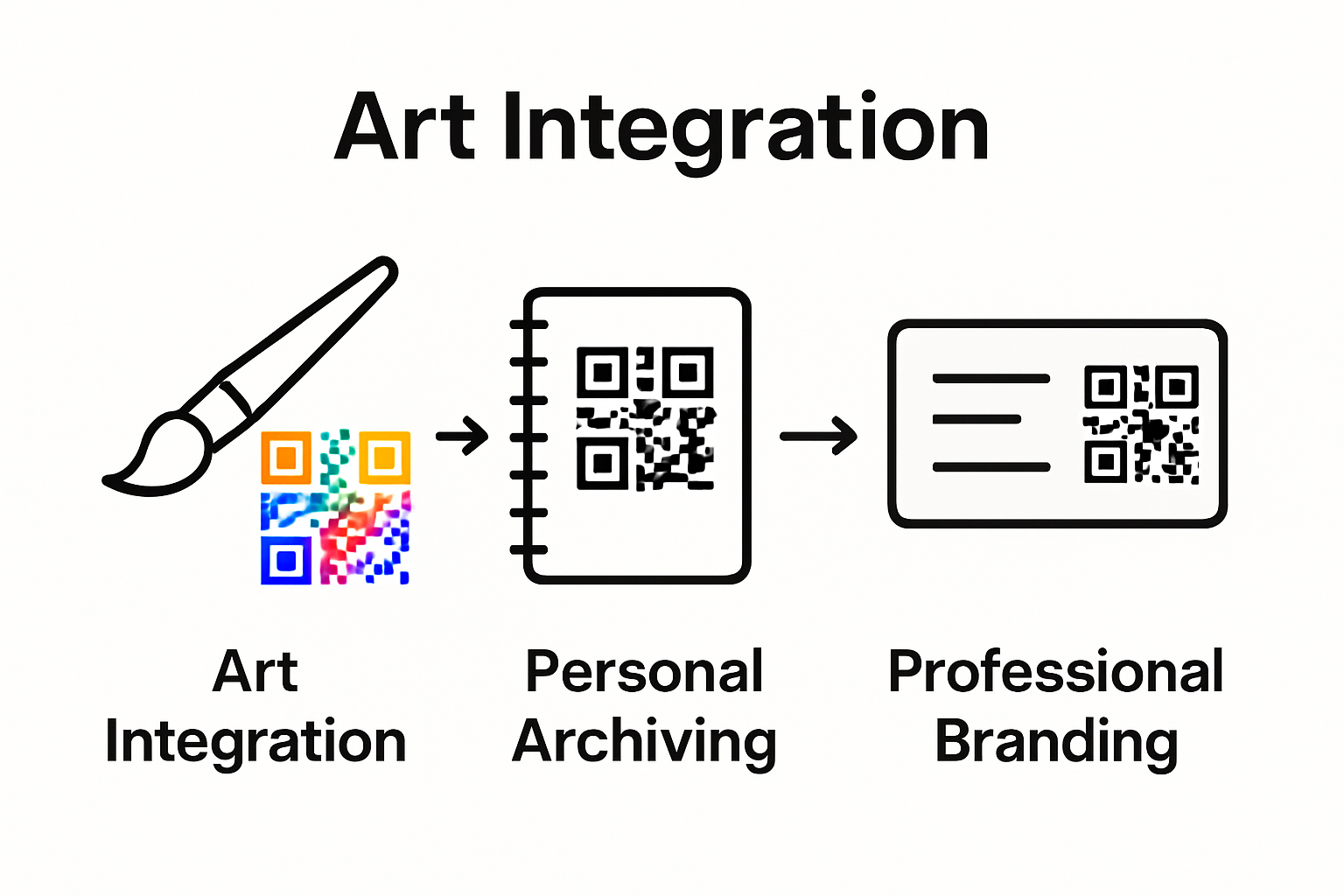
The versatility of QR codes spans multiple artistic domains. Ceramic artists can attach codes to pottery that reveal the piece’s creation process. Painters can link artworks to supplementary audio narratives or artist statements. Craft makers can create interactive exhibitions where scanning reveals behind-the-scenes content, material sourcing information, or collaborative storytelling elements. Each QR code becomes a portal to expanded artistic context, transforming passive viewing into an engaging, interactive experience.
Key applications of QR codes for artists and crafters include:
- Documenting creative processes
- Providing supplementary artwork narratives
- Creating interactive exhibition experiences
- Sharing material and technique information
- Connecting physical art with digital portfolios
Through these innovative applications, QR codes are redefining artistic communication, offering creators powerful tools to expand their storytelling capabilities and audience connections.
Cost, Privacy, and Durability Considerations
QR codes offer an accessible and versatile technology with significant advantages in cost-effectiveness and durability. Privacy and security considerations become crucial when implementing these digital markers across various personal and professional applications, requiring thoughtful strategic planning.
The production of QR codes represents an incredibly affordable digital solution, with minimal manufacturing costs and high adaptability across different materials and environments. Detecting potential security risks has become increasingly sophisticated, allowing users to implement robust protective measures that mitigate potential privacy vulnerabilities. Advanced technological approaches now enable structural analysis of QR codes, helping users identify and prevent potential phishing attempts or malicious embedded content before significant damage occurs.
Understanding the practical limitations and strengths of QR code technologies is essential for responsible implementation. While these digital markers can be printed on numerous surfaces and maintain functionality in challenging environmental conditions, users must remain vigilant about the digital content they link and the potential privacy implications. Ceramic artists, graphic designers, and craft professionals can leverage QR codes effectively by establishing clear guidelines for content management and implementing secure linking practices.
Key considerations for responsible QR code usage include:
- Verifying linked content security
- Using reputable QR code generation platforms
- Implementing periodic link audits
- Protecting personal and professional information
- Understanding potential digital vulnerabilities
By approaching QR code technology with informed caution and strategic awareness, individuals can harness these powerful digital tools while maintaining robust personal and professional security standards.
Avoiding Mistakes With QR Code Labels
Creating effective QR code labels requires strategic planning and attention to critical details that can significantly impact their functionality and user experience. Step-by-step QR code labeling becomes essential for ensuring reliable information access and preventing common implementation errors that can compromise the technology’s utility.
Scanning robustness emerges as a paramount consideration when designing QR code labels. Balancing visual aesthetics with functional integrity helps prevent potential scanning failures that could render the digital marker ineffective. Advanced design approaches now enable creators to maintain high visual appeal while ensuring consistent readability across different devices and environmental conditions, addressing one of the most frequent challenges in QR code implementation.
Understanding potential security risks represents another critical aspect of responsible QR code label usage. Structural analysis techniques have evolved to help users detect and prevent potential phishing attempts or malicious embedded content. Ceramic artists, graphic designers, and craft professionals must remain vigilant about the digital content they link, implementing robust verification processes to protect both their creative work and potential users’ digital safety.
Key strategies for avoiding QR code label mistakes include:
- Ensuring high-contrast color combinations
- Maintaining appropriate size and resolution
- Verifying link destinations before publishing
- Testing scanning capabilities across multiple devices
- Implementing periodic content audits
- Protecting sensitive information
By approaching QR code label creation with careful consideration and strategic awareness, individuals can leverage this powerful technology while minimizing potential errors and maximizing user engagement.
Unlock Your Creative Potential with Smart QR Code Labels
The article highlights how QR codes can transform everyday creativity by enabling seamless storytelling and memory preservation. If you struggle with organizing your personal or artistic projects while wanting to embed deeper meaning and multimedia into your work then Smack Tags offers a perfect solution. Our durable, fade resistant QR code labels make it easy to attach videos, images, and notes directly to your cherished belongings or artworks, elevating your creative expression and preserving stories effortlessly.

Explore our Creative – Smack Tags collection and discover how simple it is to bring your creative ideas to life with no app required. With 20 tags included and an affordable subscription for data storage you can start making your projects interactive right away. Act now to preserve your memories and engage your audience in new meaningful ways by visiting https://smacktags.com. Experience a smarter, more creative approach to daily life today.
Frequently Asked Questions
What are QR codes?
QR codes, or Quick Response codes, are two-dimensional barcodes that store information and can be scanned by digital devices, allowing users to access data quickly without manual input.
How can QR codes enhance creativity in art and design?
QR codes enable artists and designers to integrate multimedia elements into their work, creating interactive experiences that engage audiences by linking physical art to digital content.
Can QR codes be customized for personal projects?
Yes, QR codes can be customized with colors, logos, and artistic designs while maintaining their functionality, allowing creators to express their personal style and branding.
What are some practical applications of QR codes in daily life?
QR codes can be used for various purposes, such as documenting family histories, enhancing artworks, providing additional context in educational settings, and facilitating customer engagement in marketing campaigns.
Recommended
- The Essential Guide to QR Codes for Information Access – Smack Tags
- Role of QR Codes in Art: Complete Guide – Smack Tags
- Complete Guide to QR Codes in Projects – Smack Tags
- The Essential Guide to QR Codes in Crafting – Smack Tags
- 7 Interactive Classroom Ideas for Engaging Learning – Projector Display
- Making Learning Fun: Engaging Activities for Your Kids – The Zoofamily
- How Toys Inspire Creativity: Complete Guide for Parents – Learning Bugs