
Scannable Labels: Why They Transform Storage & Storytelling
More than 80 percent of American businesses now use some form of digital tagging to organize and track important items. With the growing demand for easy information access, scannable labels are quickly reshaping how people connect physical objects with digital experiences. By understanding the basics of these smart labels, you can discover creative solutions that add efficiency and depth to everyday life and work.
Table of Contents
- What Scannable Labels Are
- Scannable Label Variations Explained
- How Scannable Labels Actually Work
- Design And Durability Requirements
- Everyday Uses And Benefits
- Limitations And Best Practices
Key Takeaways
| Point | Details |
|---|---|
| Scannable Labels Enhance Interaction | Scannable labels combine physical objects with digital narratives, allowing users to access rich multimedia content instantly. |
| Versatile Applications Across Industries | These labels are applicable in diverse sectors, from inventory management to personal storage, improving organization and traceability. |
| Design and Durability Are Crucial | Successful scannable labels require resilience, clear encoding, and security features to prevent counterfeiting and ensure functionality. |
| Ongoing Limitations and Best Practices | Users should consider surface compatibility and environmental resilience while employing best practices for optimal label performance and longevity. |
What Scannable Labels Are
Scannable labels are innovative digital stickers that transform ordinary objects into interactive storytelling platforms. Unlike traditional labels, these advanced tags leverage smart label technologies to store and transmit information through embedded QR codes or similar digital markers.
These intelligent labels work by incorporating microchips or digital encoding that can be quickly scanned using smartphones or specialized readers. Smart tags are typically made from durable materials like paper, fabric, or plastics, allowing them to be attached to a wide range of items from family heirlooms to business inventory. When scanned, they can reveal rich multimedia content such as videos, text descriptions, images, or detailed background information.
The core functionality of scannable labels centers on three key attributes:
- Digital Information Storage: Capable of holding complex data beyond traditional text labels
- Quick Access: Instant retrieval of information through simple smartphone scanning
- Versatile Applications: Usable across personal, artistic, and professional contexts
From preserving family memories to tracking business assets, scannable labels represent a bridge between physical objects and their digital narratives. By transforming static items into interactive experiences, these smart tags offer a revolutionary way to document, share, and understand the stories behind our most cherished possessions.
Scannable Label Variations Explained
Scannable labels have evolved into diverse technological solutions designed to meet specific tracking and information storage needs. Innovative code technologies allow these digital markers to adapt across multiple industries and applications, each with unique encoding methods and functional capabilities.
In the realm of product tracking and safety, specialized labels emerge with remarkable capabilities. Smart labels can now function as sophisticated sensors, including:
- Time-Temperature Indicators: Monitoring perishable goods
- Gas Indicators: Detecting atmospheric changes
- Biosensors: Providing real-time health and safety data
Beyond traditional matrix-based codes, emerging technologies like Claycode represent groundbreaking approaches to digital encoding. These advanced systems can encode messages through complex tree structures, offering unprecedented design flexibility and high deformation tolerance. By enabling rich, stylized information storage, these next-generation scannable labels transform how we capture, preserve, and interact with digital narratives embedded in physical objects.
How Scannable Labels Actually Work
Scanning technology transforms ordinary labels into intelligent information carriers through sophisticated digital encoding methods. Advanced detection techniques enable these labels to store and transmit complex data through unique visual or electromagnetic patterns that can be instantly interpreted by digital devices.
The core mechanism involves encoding information in specialized formats readable by various scanning technologies. Semantic segmentation techniques allow these labels to be read accurately across different environments, using methods like:
- Barcode Scanning: Traditional linear or matrix code reading
- RFID Technology: Electromagnetic information transmission
- Millimeter-Wave Detection: Remote scanning capabilities
Cutting-edge innovations like FerroTag demonstrate the potential of scannable labels, utilizing specialized ink patterns that can be scanned remotely. These systems transform simple stickers into powerful information conduits, enabling instant access to rich digital content by simply pointing a smartphone or specialized reader. By bridging physical objects with digital narratives, scannable labels create an interactive layer of information that can be accessed anytime, anywhere.

Design And Durability Requirements
Label design represents a critical intersection of functionality, security, and sustainability for modern scannable technologies. Printable graphical codes must balance multiple complex requirements to ensure reliable performance across diverse environments and applications.
Key design considerations emerge from advanced research into label durability and security. Anti-counterfeiting strategies highlight the importance of creating labels that resist unauthorized reproduction while maintaining clear scanability. Critical design parameters include:
- Material Resilience: Resistance to environmental degradation
- Print Quality: Maintaining clear encoding under various conditions
- Security Features: Preventing unauthorized digital cloning
Sustainability plays an increasingly important role in label design, with researchers emphasizing the need for recyclable print technologies that minimize environmental impact. Modern scannable labels must integrate advanced machine learning techniques to prevent digital replication while ensuring the physical tag remains functional, readable, and environmentally responsible across multiple use scenarios.
Everyday Uses And Benefits
Scannable labels transform everyday experiences by bridging physical and digital worlds with remarkable versatility. Innovative tracking technologies enable individuals and businesses to organize, document, and share information with unprecedented ease and efficiency.
In professional environments, 2D codes provide critical traceability across multiple industries. Potential applications span numerous sectors, including:
- Food Industry: Preventing mislabeling and ensuring product safety
- Inventory Management: Tracking items with precision
- Personal Storage: Organizing home and office spaces
- Asset Documentation: Recording maintenance histories
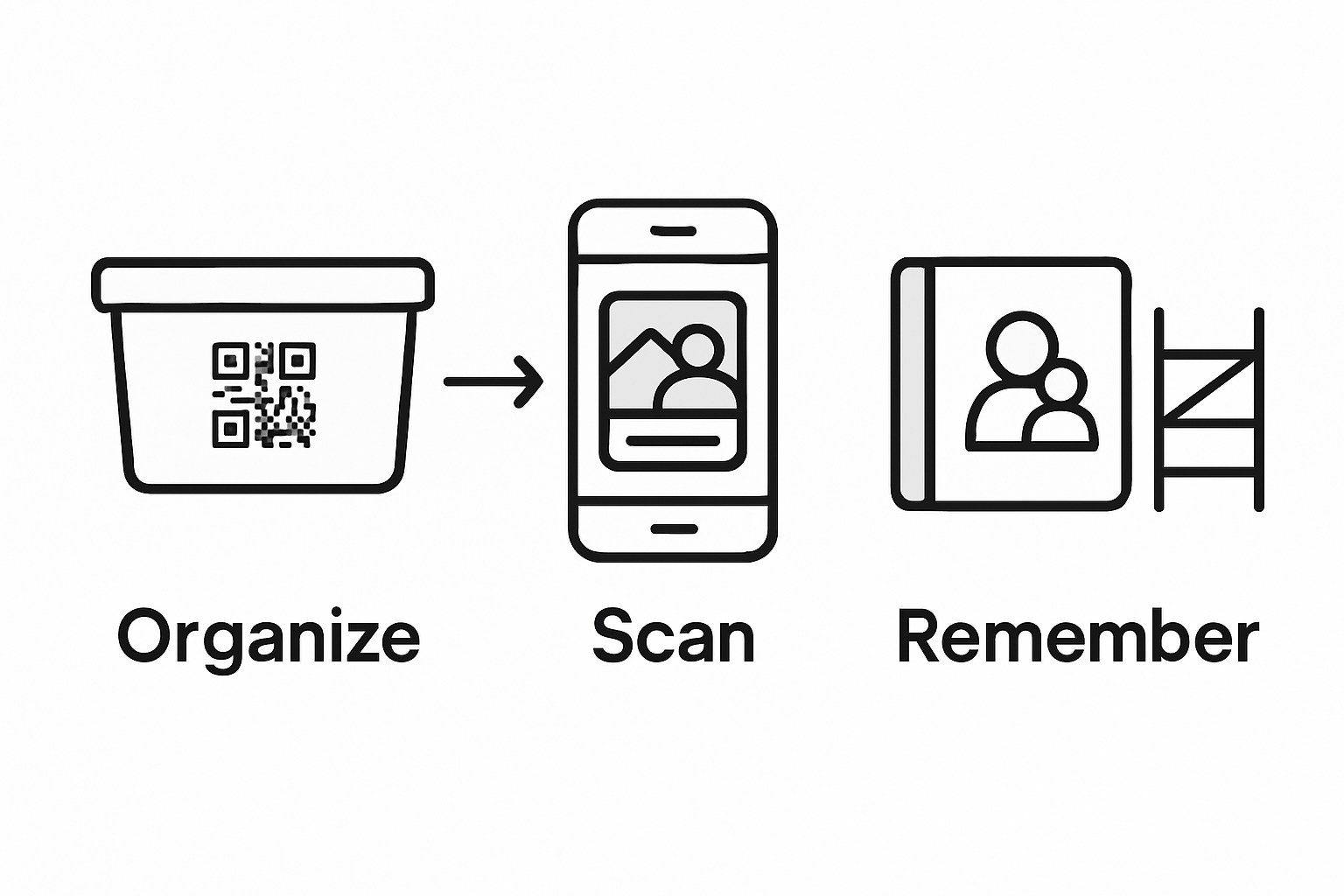
Beyond organizational benefits, scannable labels offer a personal touch by connecting physical objects to rich digital narratives. Dedicated apps allow users to link objects with detailed digital information, creating interactive experiences that preserve memories, share stories, and maintain comprehensive records of cherished possessions. From family heirlooms to business inventories, these smart labels provide a seamless method of storing and accessing complex information with just a simple scan.
Limitations And Best Practices
Scannable label technology continues to evolve, presenting both remarkable opportunities and notable challenges for users across various domains. Advanced detection methods reveal ongoing technical limitations that require strategic approaches to maximize effectiveness.
Researchers have identified critical considerations for optimal label performance, including:
- Surface Compatibility: Ensuring clear scanning across different materials
- Environmental Resilience: Maintaining readability under varying conditions
- Signal Integrity: Preventing information degradation
- Spatial Accuracy: Minimizing detection errors
Convolutional neural network technologies continue to improve semantic labeling accuracy, though challenges persist in achieving consistent high-resolution detection. Best practices involve careful label placement, using high-contrast printing, protecting tags from physical damage, and regularly verifying scanning capabilities. By understanding these limitations and implementing strategic approaches, users can significantly enhance the reliability and longevity of their scannable label systems.
Unlock the Power of Scannable Labels for Storage and Storytelling
The challenge of preserving memories while organizing personal or business items calls for simple and reliable solutions. Scannable labels provide a seamless way to connect physical objects with rich digital stories. With smart QR code stickers, you can transform your belongings into interactive experiences that store videos, images, and notes in one easy scan. This technology solves common pain points such as fading paper labels, lost information, and limited accessibility by providing durable, water-resistant, and tear-proof tags that keep your data safe.
Explore how Creative – Smack Tags brings advanced yet user-friendly labeling to your fingertips.
Start preserving your cherished memories and streamline your storage today by visiting Smack Tags. Create a digital inventory that goes beyond words and paper. With our subscription service, enjoy secure yearly data storage that is simple, efficient, and built to last. Don’t wait to upgrade your organization and storytelling—scan, connect, and share like never before.
Frequently Asked Questions
What are scannable labels?
Scannable labels are advanced digital stickers that turn ordinary objects into interactive storytelling platforms, using technologies like QR codes or embedded microchips to store and transmit information.
How do scannable labels work?
Scannable labels work by using various scanning technologies to encode complex data into formats readable by devices, allowing users to access rich digital content through a quick scan with smartphones or specialized readers.
What are the benefits of using scannable labels in everyday life?
The benefits of scannable labels include enhanced organization, the ability to connect physical objects to digital narratives, and improved traceability in settings like inventory management, food safety, and personal storage.
What are some limitations of scannable labels?
Limitations of scannable labels include challenges with surface compatibility, environmental resilience, and potential signal integrity issues. Users need to ensure proper label placement, high-contrast printing, and regular scanning capability checks to maximize effectiveness.
Recommended
- Complete Guide to Why Use Scannable Labels – Smack Tags
- Scannable Labels Tutorial: Create Smart QR Code Tags Fast – Smack Tags
- Step-by-Step Guide to Smart Storage Labeling Success – Smack Tags
- 7 Practical Uses for Scannable Stickers in Daily Life – Smack Tags
- Must-Have Tabletop Game Organizers for a Seamless Experience