
Role of QR Codes for Collectors: Preserving Value and Stories
Over 75 percent of American collectors now rely on QR codes to document and protect their prized items. Digital barcodes have rapidly become essential tools for transforming traditional collecting into a rich, interactive experience. With QR codes, collectors find smarter ways to store detailed histories, authenticate valuables, and preserve each object’s story. Discover how this powerful technology is reshaping the way Americans manage and cherish their collections.
Table of Contents
- Defining QR Codes in Collecting
- Types of Collectible Items Enhanced by QR Codes
- How QR Codes Aid Digital Inventory and Storytelling
- Attaching Multimedia and Documentation to Items
- Security, Longevity, and Privacy Considerations
Key Takeaways
| Point | Details |
|---|---|
| Enhanced Documentation | QR codes transform physical collectibles into dynamic information carriers, offering extensive documentation capabilities. |
| Innovative Storytelling | Collectors can embed rich multimedia narratives, providing context and enhancing the value of each item. |
| Digital Inventory Management | QR codes facilitate easy cataloging of items, allowing collectors to access comprehensive information with a smartphone scan. |
| Security Measures | Collectors must balance detailed documentation with security and privacy, employing strategies to protect sensitive information. |
Defining QR Codes in Collecting
QR codes represent a powerful digital technology that transforms how collectors document, track, and preserve valuable items. These two-dimensional barcodes are significantly more advanced than traditional linear barcodes, offering extensive information storage capabilities across both horizontal and vertical dimensions. Unlike standard identification methods, QR codes can encode substantially more data in a compact visual format.
At their core, QR codes (Quick Response codes) function as miniature digital repositories, capable of storing diverse information types including text, website links, contact details, and multimedia content. For collectors, this means each code becomes a dynamic information carrier that can instantly communicate an item’s provenance, history, authentication details, and personal stories. Advanced scanning technologies enable rapid information retrieval through simple smartphone interactions, making documentation more accessible than ever before.
The practical applications for collectors are immense. Artists can embed detailed creation narratives, antique enthusiasts can record item origins, and memorabilia collectors can preserve contextual information that traditional labeling methods cannot accommodate. QR codes transform static objects into interactive storytelling platforms, allowing each artifact to communicate its unique journey and significance beyond physical characteristics. By bridging physical artifacts with digital narratives, collectors can create richer, more comprehensive documentation strategies that preserve not just objects, but the rich stories surrounding them.
Types of Collectible Items Enhanced by QR Codes
Collectibles span an incredibly diverse range of items, and QR codes offer transformative documentation capabilities across multiple categories. Experimental book technologies demonstrate how digital encoding can add significant value to traditional collectible formats, turning static objects into interactive experiences. Rare books, first editions, manuscripts, and literary artifacts can now carry embedded digital histories that provide unprecedented context and authentication.
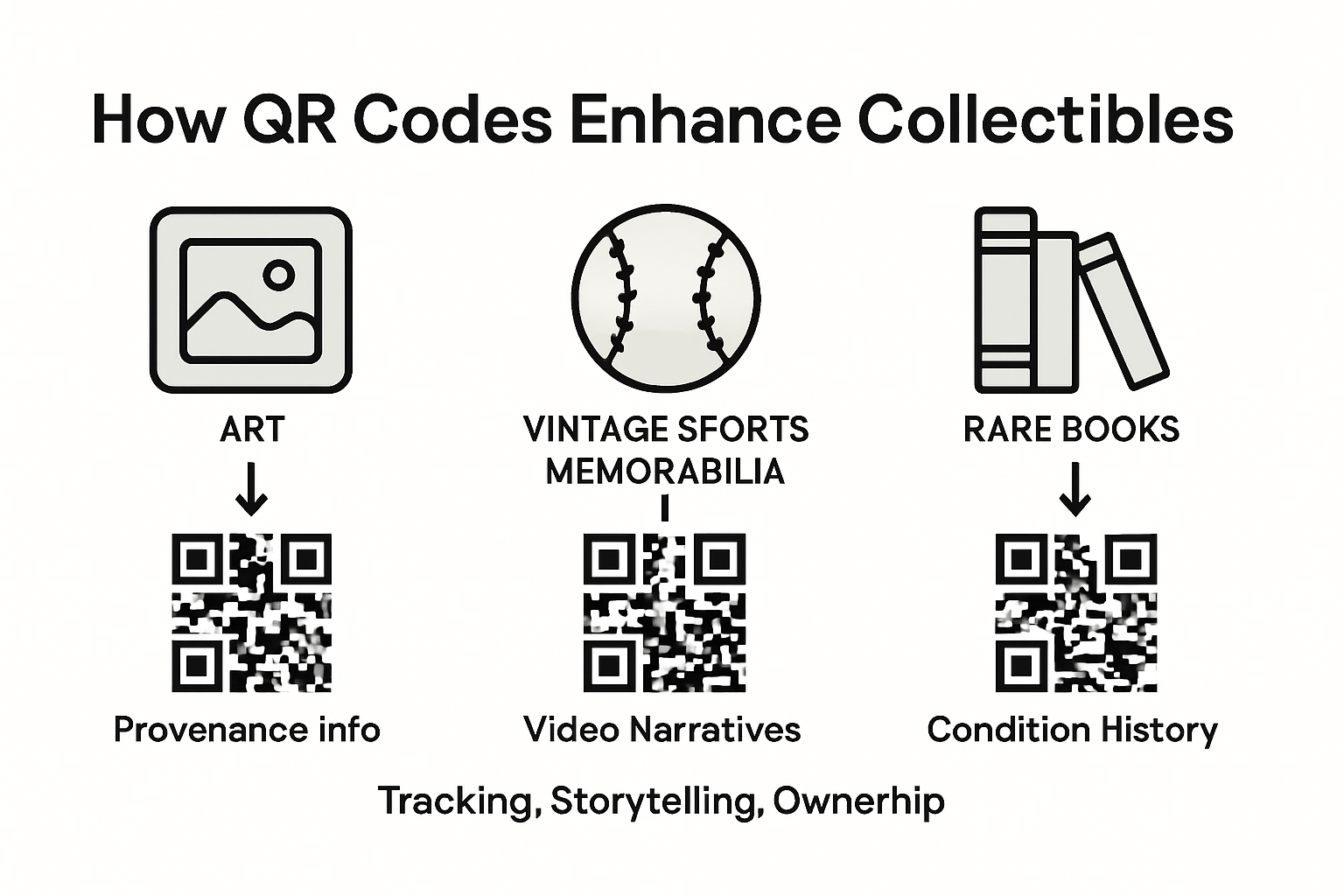
Art and museum collections represent another critical domain where QR codes create remarkable opportunities. Fine art pieces, sculptures, historical artifacts, and vintage memorabilia can now have rich multimedia narratives instantly accessible through simple smartphone scanning. Museum exhibit technologies enable collectors to access multilingual descriptions, artist backgrounds, provenance details, and comprehensive documentation that dramatically enhance an item’s perceived and documented value.
Beyond art and literature, other significant collectible categories benefit enormously from QR code integration. Vintage sports memorabilia, autographed items, coin and stamp collections, classic automobiles, and even fashion artifacts can now carry digital passports detailing their unique histories. Collectors can record ownership chains, restoration processes, authentication certificates, and personal stories directly connected to each individual item. This digital layering transforms collecting from a purely physical pursuit into an immersive, interconnected experience that preserves not just objects, but their entire contextual narratives.
How QR Codes Aid Digital Inventory and Storytelling
Digital inventory management represents a revolutionary approach for collectors, with QR codes serving as powerful technological bridges between physical items and comprehensive digital documentation. Advanced information collection systems demonstrate how these compact codes can transform the way collectors catalog, track, and preserve their valuable collections. By encoding detailed metadata directly onto items, collectors can instantly access comprehensive information about provenance, condition, acquisition history, and personal significance with a simple smartphone scan.
The storytelling potential of QR codes extends far beyond basic inventory tracking. Educational technology applications reveal how these digital markers can create immersive narratives around collectible items. Each QR code becomes a digital portal, allowing collectors to embed rich multimedia content such as video interviews, restoration process documentation, historical context, and personal memories directly connected to specific artifacts. This approach transforms collecting from a static preservation activity into a dynamic, interactive experience that captures the complete contextual ecosystem surrounding each item.

Practical implementation of digital inventory through QR codes offers collectors unprecedented organizational capabilities. Collectors can create comprehensive digital archives that include high-resolution photographs, authentication certificates, appraisal documents, and personal annotations. These digital records not only enhance the item’s documented value but also provide a secure, easily accessible method of maintaining detailed collection histories. Whether managing a small personal collection or a extensive museum-quality assemblage, QR codes offer a flexible, scalable solution for preserving the intricate stories and significance of collectible items across generations.
Attaching Multimedia and Documentation to Items
QR codes have revolutionized how collectors document and share the rich histories of their treasured items, transforming physical objects into dynamic storytelling platforms. Innovative digital content linking demonstrates the powerful potential of embedding multimedia directly onto collectible items, allowing instant access to comprehensive background information through simple smartphone interactions. This technology enables collectors to create intricate digital narratives that extend far beyond traditional physical documentation methods.
Multimedia attachment through QR codes provides unprecedented flexibility for preserving item context. Museum documentation technologies reveal how these compact digital markers can instantly connect physical artifacts with extensive historical, cultural, and personal information. Collectors can now attach video interviews, detailed restoration records, provenance documentation, historical context, and personal memories directly to items, creating a rich, immersive experience that captures the complete story behind each collected piece.
The practical applications of multimedia documentation are remarkably diverse. Artists can embed creation process videos, vintage automobile collectors can attach original purchase documents and restoration journey footage, and memorabilia enthusiasts can link personal stories and expert authentication records. These digital attachments not only enhance the item’s perceived value but also create a permanent, shareable archive that preserves the nuanced narratives surrounding each collectible. By transforming static objects into interactive storytelling platforms, QR codes offer collectors a powerful tool for maintaining and sharing the intricate histories of their most cherished possessions.
Security, Longevity, and Privacy Considerations
Collectors must carefully navigate the digital landscape of QR code technology, balancing the benefits of rich documentation with critical security and privacy concerns. Innovative scanning-robust techniques demonstrate sophisticated approaches to ensuring QR codes remain functional and resistant to potential damage or unauthorized access. This technological advancement provides collectors with greater confidence in protecting their digital documentation while maintaining the integrity of their valuable items’ digital records.
Privacy protection emerges as a paramount consideration for collectors utilizing QR code technologies. Collectors can implement strategic approaches such as password-protecting sensitive multimedia content, limiting access to specific viewer groups, and carefully curating the information embedded within QR codes. Advanced aesthetic QR code generation methods offer additional layers of security by creating visually complex codes that are more challenging to duplicate or manipulate, thereby adding an extra dimension of protection for sensitive collection information.
The longevity of digital documentation represents another critical aspect of QR code implementation for collectors. Strategically designed QR codes can withstand environmental challenges, including moisture, sunlight exposure, and physical wear. Collectors should consider using high-quality, durable label materials, implementing backup digital storage systems, and periodically refreshing their digital documentation to ensure long-term preservation. This approach transforms QR codes from simple information carriers into robust, reliable archival tools that can protect and perpetuate the stories and significance of cherished collectible items across generations.
Elevate Your Collecting Experience with Smart QR Code Labels
Collectors face the challenge of preserving the rich stories and provenance of treasured items while ensuring easy access to detailed information without clutter or risk of damage. This article highlights how QR codes unlock dynamic storytelling and digital inventory management for artists, antique enthusiasts, and memorabilia collectors by linking physical artifacts to extensive multimedia content. If you want to overcome issues like fading paper labels or scattered records, and truly preserve the value and narrative behind your collection, digital solutions are essential.
Discover how Creative – Smack Tags offers durable, water-resistant QR code labels designed specifically for collectors who want to attach videos, images, and detailed descriptions right to their items.

Take command of your collection today by creating a visual and interactive inventory without the hassle of extra apps or complicated systems. Learn how to convert static objects into storytelling platforms with the simple, reliable QR code labels from Smack Tags. Start preserving your memories and item histories effortlessly and protect your investment with labels designed to last. Explore our full range and transform your collection now.
Frequently Asked Questions
What are QR codes and how do they work for collectors?
QR codes, or Quick Response codes, are two-dimensional barcodes that can store vast amounts of information. For collectors, they serve as digital repositories that encode details about an item’s provenance, history, and authenticity, accessible through a simple smartphone scan.
How can QR codes enhance the storytelling aspect of collectibles?
QR codes allow collectors to embed multimedia content, such as videos, images, and documents, directly related to each item. This adds rich narratives and context, transforming static items into interactive storytelling platforms that convey their unique journeys.
What types of collectible items can benefit from QR codes?
A wide range of collectibles, including rare books, fine art, vintage sports memorabilia, and fashion artifacts, can benefit from QR code integration. These codes can provide detailed information about item history, ownership, restoration processes, and personal stories, thereby enhancing their value and documentation.
How can collectors ensure the security and longevity of QR codes?
Collectors can enhance the security of QR codes by password-protecting sensitive content and utilizing high-quality materials to prevent environmental damage. Regularly backing up digital records and refreshing the QR codes will help maintain their functionality and preserve the information for future generations.
Recommended
- QR Codes in Preservation – Transforming How We Store Memories – Smack Tags
- 7 Practical Types of QR Code Uses for Artists and Crafters – Smack Tags
- Complete Guide to QR Codes in Storage Solutions – Smack Tags
- Role of QR Codes in Art: Complete Guide – Smack Tags
- Was ist Vintageparfum? Ein umfassendes Verständnis
- Understanding Collecting Rare Comics Guide for Enthusiasts – The Mansion Press