
Why Go Paperless With QR Codes for Storage
More than 80 percent of American businesses are searching for smarter ways to organize information and reduce clutter. The shift toward paperless storage offers a powerful answer by blending convenience with advanced digital access. QR codes now make it simple to store, retrieve, and manage records without stacks of paper or lost files. This guide reveals how paperless storage with QR codes can transform your workflow, making organization easier and information instantly available.
Table of Contents
- Defining Paperless Storage With QR Codes
- How QR Codes Store And Share Information
- Top Applications For Artists And Businesses
- Benefits Over Traditional Paper Systems
- Potential Drawbacks And Cost Considerations
Key Takeaways
| Point | Details |
|---|---|
| Paperless Storage Revolution | QR codes enhance document management by providing instant digital access and comprehensive information tracking, significantly reducing reliance on physical paperwork. |
| Enhanced Information Sharing | QR codes can store diverse data types, enabling users to link multimedia content directly to physical items, thus enriching user engagement and storytelling. |
| Efficiency Over Traditional Methods | Digital QR code systems streamline document retrieval and management, offering permanent digital preservation and improved organizational efficiency compared to traditional paper systems. |
| Considerations for Implementation | Organizations must account for initial setup costs, ongoing maintenance, and security protocols when transitioning to QR code-based solutions to optimize their effectiveness. |
Defining Paperless Storage With QR Codes
Paperless storage represents a revolutionary approach to managing documents, information, and physical items through digital tracking and organization. QR codes have emerged as powerful tools that transform traditional storage methods by providing instant digital access and comprehensive information management. These small square matrices can encode significant amounts of data, enabling users to store, track, and retrieve information with unprecedented ease.
The concept of paperless storage goes beyond simply eliminating physical documents. Electronic document management systems utilizing QR code technologies represent a sophisticated approach to information preservation and accessibility. By embedding QR codes on storage containers, shelves, or individual items, individuals and businesses can create dynamic digital inventories that transcend traditional paper-based record keeping. This method allows for rapid scanning, instant information retrieval, and comprehensive tracking without the limitations of physical documentation.
QR codes offer remarkable versatility in storage applications. From laboratory equipment management to home organization, these digital markers can encode critical details like purchase dates, maintenance histories, personal stories, and comprehensive item descriptions. Research in physics laboratory management demonstrates how QR code scanning systems dramatically improve traceability and organizational efficiency, highlighting their potential across diverse contexts. Whether you are an artist preserving creative works, a homeowner managing personal collections, or a business professional tracking inventory, QR codes provide a seamless bridge between physical objects and their digital narratives.
The benefits of adopting QR codes for storage are numerous. They offer:
- Instant digital access to item information
- Reduced physical paperwork
- Enhanced organization and tracking capabilities
- Ability to store multimedia content alongside item details
- Durable and water-resistant tracking solutions
- Simple scanning without requiring complex technological expertise
By embracing QR code storage solutions, you transform how information is preserved, accessed, and shared across personal and professional domains.
How QR Codes Store and Share Information
QR codes are sophisticated digital storage systems that transform how we capture, preserve, and communicate information. These two-dimensional matrix barcodes encode data through intricate patterns of black and white squares, enabling compact and versatile information storage across multiple platforms and devices. Unlike traditional barcodes, QR codes can store significantly more complex information, making them powerful tools for digital communication and information management.
The technical capabilities of QR codes are remarkably diverse. They can store multiple types of digital content, including website URLs, contact details, SMS messages, calendar events, geographic locations, and text information. This flexibility allows individuals and businesses to embed rich, multimedia content into a small, scannable graphic. Imagine transforming a simple storage label into a gateway of information – providing instant access to maintenance histories, personal stories, purchase records, or comprehensive item descriptions with just a quick smartphone scan.

QR codes operate through a complex encoding mechanism that allows maximum data compression and error correction. The unique square matrix is divided into modules that represent binary data, with each black and white square strategically positioned to convey specific information. This design enables QR codes to maintain data integrity even when partially damaged or obscured, making them incredibly reliable for long-term information storage and sharing.
The practical applications of QR code information storage are virtually limitless. Whether you are an artist documenting creative works, a homeowner tracking personal collections, or a business professional managing inventory, these digital markers provide a seamless bridge between physical objects and their digital narratives. Key advantages include:
- Instant digital access to comprehensive item information
- Ability to store multiple data types
- Enhanced data security and traceability
- Compatibility with most modern smartphone devices
- Compact and visually unobtrusive design
- Minimal physical space requirements
By understanding how QR codes store and share information, you unlock a powerful tool for digital organization and communication that transcends traditional record-keeping methods.
Top Applications for Artists and Businesses
QR codes have emerged as transformative tools for artists and businesses, bridging physical and digital experiences in innovative ways. Experimental projects like Between Page and Screen demonstrate how these digital markers can create immersive multimedia experiences, revealing the profound potential of QR code technology across creative and professional domains.
For artists, QR codes offer unprecedented opportunities to expand storytelling and audience engagement. Visual artists can embed additional context about artwork, including creation processes, artist statements, or behind-the-scenes videos directly into exhibition labels. Crafters can attach maintenance instructions, material sourcing information, or personal narratives to handmade pieces, creating deeper connections with their audience. Photographers might link digital portfolios, print purchase details, or location information directly to their physical prints.
Cultural institutions and businesses can leverage QR codes to provide multilingual and context-rich information experiences, enhancing communication and accessibility. Museums can offer guided tours, translate exhibit descriptions, and provide interactive multimedia content. Retail businesses can use QR codes to share product details, sustainability information, sizing guides, and customer reviews instantly. Professional applications extend across multiple sectors:
Business Applications:
- Inventory tracking and management
- Equipment maintenance logs
- Digital business card exchanges
- Product authentication and traceability
- Warranty and service record documentation
Artist and Creative Applications:
- Portfolio expansion
- Artwork provenance tracking
- Digital storytelling
- Process documentation
- Interactive exhibition experiences
By integrating QR codes, artists and businesses can transform static objects into dynamic, information-rich experiences that connect physical and digital worlds with unprecedented ease and creativity.
Benefits Over Traditional Paper Systems
Digital record management represents a quantum leap beyond traditional paper-based systems, offering unprecedented efficiency and flexibility. Implementing electronic document management systems with QR codes dramatically reduces working hours and storage space while enhancing operational efficiency, providing organizations and individuals with powerful alternatives to outdated paper tracking methods.
Traditional paper systems suffer from numerous inherent limitations. Physical documents are vulnerable to damage, loss, and degradation. They require substantial physical storage space, making retrieval time-consuming and often inefficient. In contrast, QR code-based systems create instant, searchable digital archives that can be accessed from anywhere with a smartphone. Documents can be backed up, shared, and preserved without the risk of physical deterioration.

Laboratory and inventory management research demonstrates how QR code storage systems streamline tracking processes and reduce equipment misplacement, highlighting the transformative potential of digital organization. The ability to instantly capture, store, and retrieve comprehensive information represents a significant advancement over manual record-keeping.
Key advantages of QR code systems over traditional paper methods include:
Efficiency Improvements:
- Instant digital document retrieval
- Reduced physical storage requirements
- Simplified information sharing
- Enhanced search and organization capabilities
- Permanent digital preservation
Security and Accessibility Benefits:
- Cloud-based backup options
- Encryption and data protection
- Multi-device accessibility
- Version control and tracking
- Reduced risk of physical document loss
By transitioning from paper to digital QR code systems, individuals and businesses can unlock unprecedented levels of organizational efficiency, security, and information management.
Potential Drawbacks and Cost Considerations
Digital transformation always involves careful evaluation of potential challenges and investment requirements. Implementation of QR code systems may present technical hurdles, particularly related to accessibility and smartphone compatibility, requiring organizations to consider their technological infrastructure and user capabilities.
While QR codes offer significant advantages, they are not without potential vulnerabilities. Security concerns remain a critical consideration, with potential risks of phishing attacks and unauthorized data access that necessitate robust implementation strategies. Businesses and individuals must invest in comprehensive security protocols to mitigate potential digital risks associated with QR code technologies.
The initial transition from traditional paper systems to QR code-based solutions involves several key cost considerations. Organizations must factor in expenses such as:
Initial Implementation Costs:
- Hardware investments (scanners, smartphones)
- Software integration and training
- Digital infrastructure upgrades
- Initial data migration expenses
- Potential technical support requirements
Ongoing Technological Considerations:
- Regular software updates
- Cybersecurity maintenance
- Device compatibility management
- User training and support
- Potential subscription or licensing fees
By carefully weighing these potential drawbacks against the significant benefits, users can develop strategic approaches to QR code implementation that maximize value while minimizing technological and financial risks.
Embrace Paperless Storage with Smack Tags for Effortless Organization
Struggling with endless stacks of paper and lost information When managing your belongings or business inventory, switching to digital storage solutions using QR codes can redefine ease and efficiency. The article highlights challenges like limited physical space, item traceability, and the hassle of traditional record keeping. Smack Tags offers a perfect answer with durable, water-resistant QR code labels that connect your physical items to rich digital stories. Whether you want to preserve precious memories, track equipment maintenance, or manage inventory seamlessly, our Creative – Smack Tags solutions make it simple and powerful.
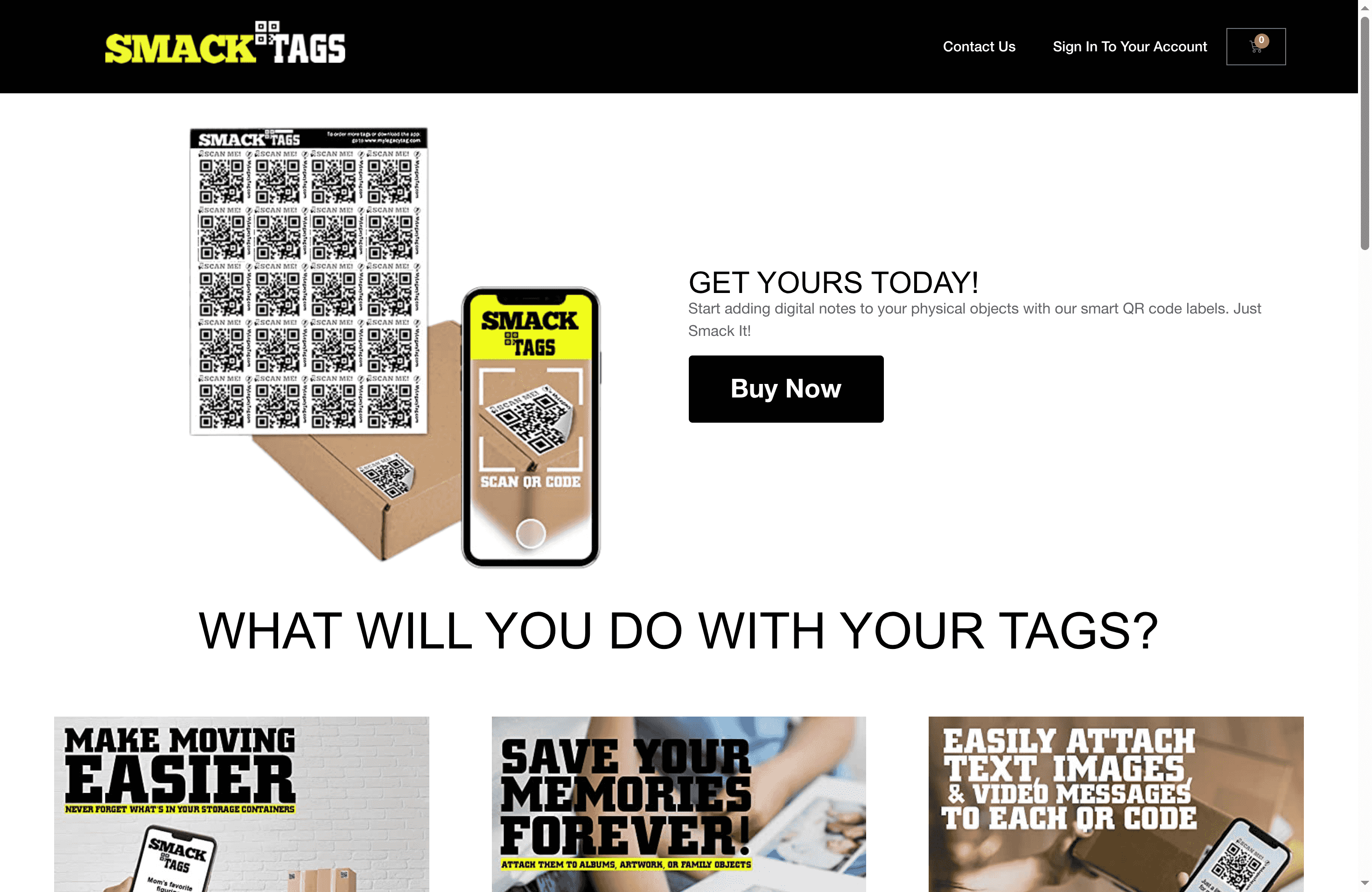
Discover how quickly you can create a visual inventory with no app needed and attach videos, images, and notes to your items. Don’t wait until lost paperwork or forgotten details slow you down. Visit Smack Tags today to order your set and start transforming how you organize. Take control of your storage with smart QR labels designed for all your personal and business needs.
Frequently Asked Questions
What are QR codes and how do they work for storage?
QR codes are two-dimensional matrix barcodes that can store a wide range of data types. They encode information through intricate patterns of black and white squares, allowing users to store, track, and retrieve information efficiently by scanning them with a smartphone or other QR code readers.
What are the main benefits of using QR codes for paperless storage?
Using QR codes for storage offers several benefits including instant digital access to item information, reduced physical paperwork, enhanced organization and tracking capabilities, and the ability to store multimedia content alongside written details.
Can QR codes improve inventory management for businesses?
Yes, QR codes can dramatically improve inventory management by enabling instant tracking and retrieval of item information, maintaining equipment maintenance logs, and providing product authentication, which helps to streamline operations and reduce misplacement.
What potential drawbacks should I consider before implementing QR codes for storage?
Potential drawbacks include initial implementation costs such as hardware and software expenses, user training, and ongoing maintenance requirements. Additionally, security concerns, such as phishing attacks or unauthorized access, should be considered when developing a comprehensive implementation strategy.
Recommended
- Complete Guide to QR Codes in Storage Solutions – Smack Tags
- Role of QR Codes in Recordkeeping: Complete Guide – Smack Tags
- How QR Codes Store Information: Complete Guide – Smack Tags
- Complete Guide to QR Codes in Organizing – Smack Tags
- Cozee Bay – How to Reduce Paper Towel Waste for a More Sustainable Space