
Role of QR Codes in Tracking: Essential Guide
Nearly every american interacts with QR codes, yet most people do not realize that these compact symbols can store more than 4,000 characters of information. QR codes have moved far beyond basic product labels to become essential for tracking, monitoring, and managing assets across countless industries. This guide clarifies how QR codes work, their different types, and how their tracking abilities impact both personal and business uses, all while considering privacy and security.
Table of Contents
- Defining QR Codes And Tracking Purposes
- Types Of QR Codes Used For Tracking
- How QR Codes Enable Item Monitoring
- Common Applications In Personal And Business Use
- Privacy, Security, And Legal Considerations
Key Takeaways
| Point | Details |
|---|---|
| Versatile Information Storage | QR codes can store various types of data including URLs, contact info, and tracking details, making them effective across multiple industries. |
| Innovative Variants for Specific Needs | New QR code types, like the Rectangular Micro QR Code, offer tailored tracking solutions for space-constrained environments. |
| Enhanced Tracking Capabilities | QR codes support real-time tracking for inventory, location, and attendance, significantly improving monitoring processes. |
| Privacy and Security Vigilance Required | Users must be aware of potential risks associated with QR codes and implement protective measures to safeguard personal information. |
Defining QR Codes and Tracking Purposes
QR codes represent a powerful digital tracking technology that enables rapid information retrieval and management. Originally developed in 1994 by Denso Wave, these two-dimensional matrix barcodes are designed to encode diverse types of data quickly and efficiently Wikipedia.
At their core, QR codes function as sophisticated information storage and transmission tools. Unlike traditional barcodes, they can hold significantly more data in a compact visual format. These codes can encode various information types including:
- Website URLs
- Plain text messages
- Contact information
- Geographic coordinates
- Product tracking details
- Inventory management data
Tracking purposes for QR codes span multiple industries and applications. Manufacturing, logistics, healthcare, and retail sectors particularly benefit from their versatile tracking capabilities. For instance, our comprehensive guide to QR codes in organizations explores how businesses leverage these technologies for streamlined information management.
The technological advancement of QR codes continues with innovative variants like the Rectangular Micro QR Code (rMQR Code), standardized in 2022 as ISO/IEC 23941. These compact versions are specifically designed for space-constrained environments, offering enhanced tracking solutions for industries requiring minimal labeling footprints Wikipedia.
Types of QR Codes Used for Tracking
QR codes have evolved into multiple specialized variants, each designed to address specific tracking and information storage requirements across different industries. Wikipedia highlights several primary types of QR codes that enable efficient data management and tracking solutions.
The main types of QR codes used for tracking include:
- Standard QR Codes: Versatile and widely used, capable of storing extensive data
- Micro QR Codes: Compact versions ideal for smaller product labels
- iQR Codes: Advanced format with higher data density
- Rectangular Micro QR Codes (rMQR): Specialized for space-constrained environments
The Rectangular Micro QR Code represents a particularly innovative tracking solution. Our step-by-step QR code labeling guide explores how these compact barcodes enable precise tracking in industries with limited physical space. Developed to address spatial constraints, rMQR codes offer enhanced flexibility for tracking applications where traditional square QR codes might be impractical Wikipedia.
Each QR code type offers unique advantages for tracking purposes.
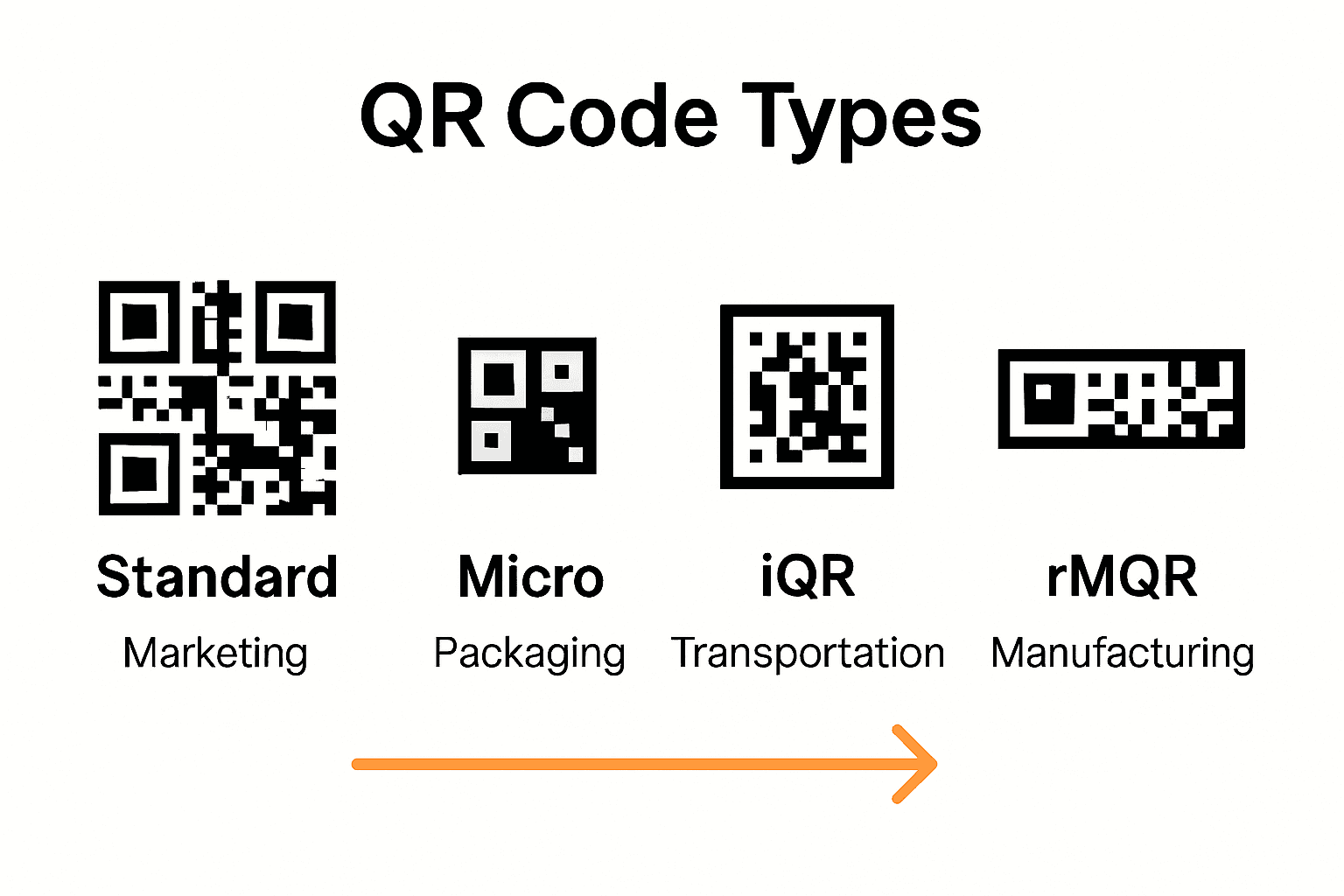 Standard QR codes work best for general inventory management, while Micro and rMQR variants excel in specialized scenarios like medical equipment tracking, asset management, and logistics. Their ability to store complex information in minimal space makes them invaluable tools for businesses seeking efficient, digital tracking solutions.

How QR Codes Enable Item Monitoring
QR codes have revolutionized tracking capabilities across multiple sectors by providing a sophisticated and versatile method of monitoring items, personnel, and locations. Cogito Research demonstrates how QR code-based systems can efficiently track and record critical information with unprecedented accuracy and speed.
The monitoring capabilities of QR codes are remarkably diverse, enabling tracking through multiple mechanisms:
- Real-time Location Tracking: Instantly record and update item or personnel locations
- Attendance Management: Accurately log entry and exit times
- Inventory Control: Track product movement and stock levels
- Asset Management: Monitor equipment usage and maintenance history
During global challenges like the COVID-19 pandemic, QR codes proved their exceptional monitoring potential. The NZ COVID Tracer app exemplified how these technologies could be deployed for comprehensive contact tracing, showcasing their adaptability in critical monitoring scenarios.
To maximize QR code tracking effectiveness, our guide to QR codes in storage solutions provides comprehensive insights into implementing these digital tracking methods across various organizational contexts. By converting physical items into trackable digital assets, businesses and individuals can create more transparent, efficient monitoring systems that provide real-time insights and enhanced accountability.
Common Applications in Personal and Business Use
Wikipedia highlights the extraordinary versatility of QR codes, showcasing their widespread applicability across personal and professional domains. These compact digital markers have transformed how we manage, track, and interact with information, bridging physical and digital experiences seamlessly.
In personal contexts, QR codes enable innovative tracking and information sharing:
- Memory Preservation: Attach digital stories to physical objects
- Personal Inventory Management: Track household items and belongings
- Event and Travel Documentation: Store ticket information and travel details
- Personal Health Tracking: Record medical histories and vaccination records
Businesses leverage QR codes for multiple strategic purposes. From product tracking to marketing initiatives, these digital tools provide robust solutions for complex information management challenges. Our guide to QR codes in business explores the transformative potential of these technologies in organizational settings.
Beyond traditional applications, innovative systems like QRpedia demonstrate the creative potential of QR technology. Wikipedia reveals how these codes can deliver multilingual content, connecting physical objects with rich digital narratives and making information more accessible across linguistic boundaries. Whether used for personal keepsakes or sophisticated business processes, QR codes continue to redefine how we capture, share, and interact with information.
Privacy, Security, and Legal Considerations
QR codes, while powerful digital tools, introduce complex privacy and security challenges that users and organizations must carefully navigate. Wikipedia warns that malicious QR codes can potentially exploit significant technological vulnerabilities, compromising user privacy and device security.
Key privacy and security risks associated with QR codes include:
- Unauthorized Website Redirection: Malicious codes linking to dangerous websites
- Data Harvesting: Potential unauthorized collection of personal information
- Device Compromise: Risk of granting unintended access to device features
- Tracking and Surveillance: Potential misuse of location and interaction data
To mitigate these risks, users and organizations should implement robust protective strategies. This includes verifying QR code sources, using secure scanning applications, and maintaining updated device security protocols. Our privacy policy provides additional guidance on protecting personal information in digital interactions.
Legal considerations surrounding QR code usage continue to evolve, reflecting the complex intersection of technology, privacy, and data protection. Organizations must remain vigilant, ensuring compliance with emerging regulations and maintaining transparent practices that respect individual privacy rights while leveraging the innovative potential of QR code technologies.
Unlock the Full Potential of QR Code Tracking for Your Business and Personal Needs
If you are looking to enhance your tracking and inventory management with reliable, easy-to-use QR code solutions this is the perfect opportunity. The article explains challenges like space constraints and the need for precise item monitoring with evolving QR code types such as Rectangular Micro QR Codes. With these technologies, tracking becomes faster, more accurate, and adaptable.
Discover how Creative – Smack Tags offers durable, fade-resistant QR code labels that make item tracking simple without any complicated apps. Our QR code stickers empower you to create detailed digital inventories for personal keepsakes or business assets alike. Act now to streamline your processes with smart labeling from Smack Tags. Visit our website and start transforming how you manage and protect your valuable items today.
Frequently Asked Questions
What are QR codes and how do they work for tracking?
QR codes are two-dimensional barcodes that encode various types of data, enabling quick and efficient information retrieval. They serve as sophisticated tools for tracking information across different industries, such as manufacturing and logistics.
What types of QR codes are best for tracking purposes?
The main types of QR codes used for tracking include Standard QR Codes, Micro QR Codes, iQR Codes, and Rectangular Micro QR Codes (rMQR), each designed for specific tracking requirements and space considerations.
How can QR codes be used for real-time monitoring?
QR codes enable real-time monitoring by recording and updating item or personnel locations instantly, as well as tracking inventory levels, attendance, and equipment usage efficiently.
What privacy concerns should be considered when using QR codes?
Privacy concerns include unauthorized redirection to malicious websites, potential data harvesting, and risks associated with tracking and surveillance. It’s important to verify QR code sources and use secure scanning apps to mitigate these risks.
Recommended
- Complete Guide to QR Codes in Organizations – Smack Tags
- The Essential Guide to QR Codes for Information Access – Smack Tags
- Complete Guide to Information Access via QR Codes – Smack Tags
- Role of QR Codes in Business: Complete Guide – Smack Tags
- How Step Tracking Motivates Consistent Physical Activity? – LeanAndFit