
Why Use QR Codes for Business Records Today
Nearly every American business handles thousands of records each year, yet over 40 percent still rely on outdated paper methods that slow down daily operations. As digital demands increase, organizations face mounting pressure to store, access, and secure information faster and more efficiently. Understanding how QR codes can revolutionize business record management means gaining the tools to minimize chaos, reduce errors, and stay competitive in a rapidly changing environment.
Table of Contents
- Defining QR Codes In Business Records
- How QR Codes Store And Access Information
- Real-World Business Applications Explained
- Benefits Over Traditional Recordkeeping Methods
- Risks, Privacy, And Reliability Challenges
Key Takeaways
| Point | Details |
|---|---|
| Utilization of QR Codes | QR codes facilitate efficient access to digital information linked to physical documents, enhancing record management. |
| Enhanced Operational Efficiency | Businesses can streamline processes such as inventory tracking, document authentication, and customer interactions using QR codes. |
| Advantages Over Traditional Methods | QR code-based systems reduce physical storage needs and improve data security while enabling instant information retrieval. |
| Privacy and Security Considerations | Organizations must navigate privacy risks and implement robust protective measures to ensure user data is managed ethically and securely. |
Defining QR Codes in Business Records
A Quick Response (QR) code represents a powerful two-dimensional matrix barcode that enables businesses to store and quickly access digital information through a simple scan. These compact graphical codes can transform how organizations manage and retrieve records by linking physical documents to digital repositories. QR codes function as intelligent bridges between tangible paperwork and digital databases, allowing instant information retrieval with a smartphone or specialized scanning device.
In business record management, QR codes serve multiple critical functions. They can encode complex information about documents such as document numbers, creation dates, authorized personnel, and detailed tracking metadata. The Rectangular Micro QR Code variation provides even more flexibility, enabling businesses to integrate these codes into various document formats without compromising design aesthetics or available space.
The practical applications of QR codes in business records are extensive. Organizations can use these codes to:
- Track inventory movements
- Authenticate official documents
- Manage asset lifecycles
- Streamline record retrieval processes
- Reduce manual data entry errors
By embedding digital information within a scannable graphic, businesses can create more efficient, transparent, and accessible record management systems that save time and reduce operational complexity.
How QR Codes Store and Access Information
QR codes represent a sophisticated digital storage mechanism that transforms how businesses capture and retrieve critical information. These two-dimensional matrix barcodes utilize a complex grid of black and white squares to encode diverse data types, including numeric, alphanumeric, and binary information. By arranging these squares in specific patterns, QR codes can compress substantial amounts of data into a compact visual format that smartphones and specialized scanners can instantly decode.
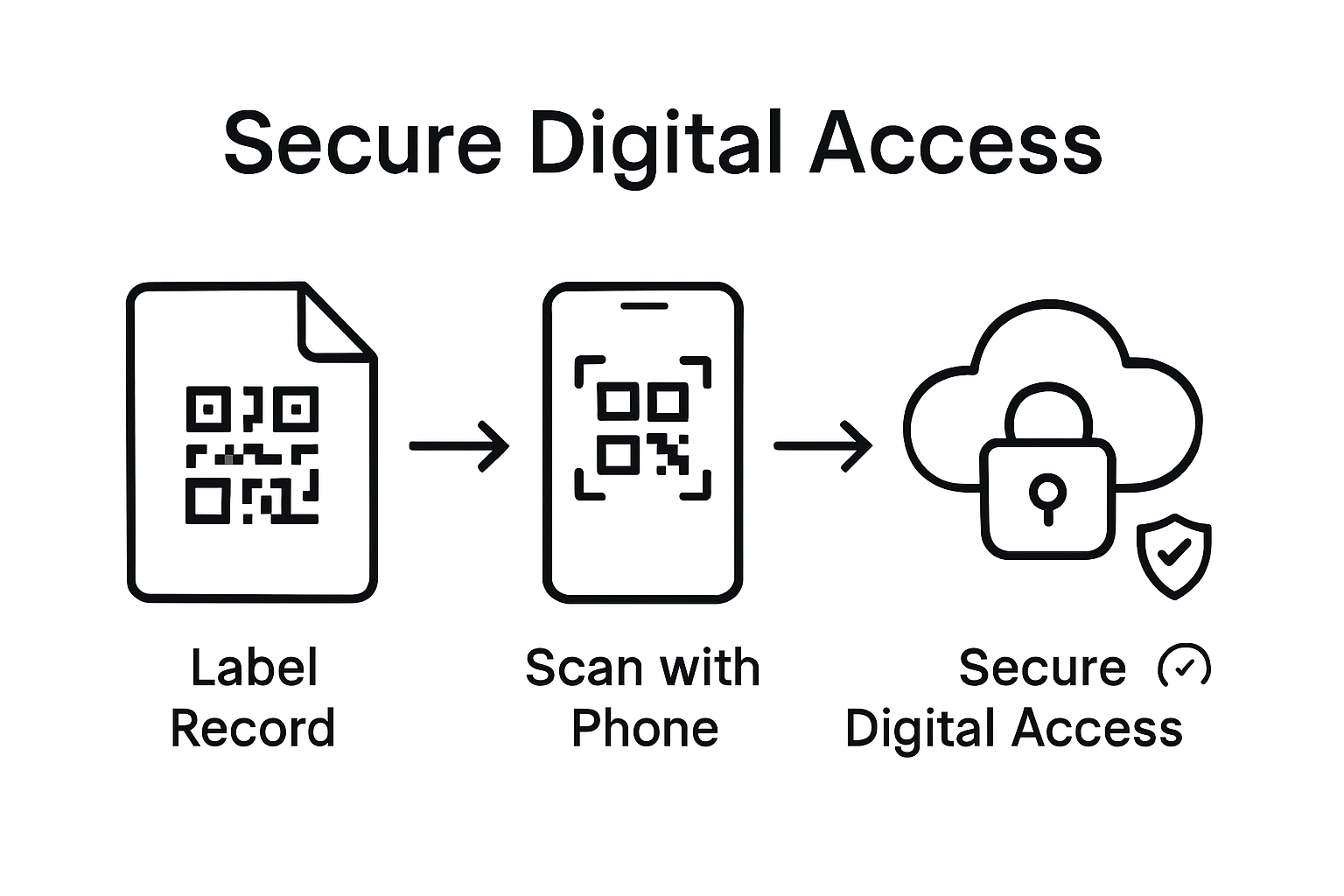
The technical architecture of QR codes allows for remarkable flexibility in information storage. The Rectangular Micro QR Code variation demonstrates this adaptability, enabling businesses to embed codes in constrained spaces without sacrificing data integrity. Each QR code contains error correction capabilities, which means even partially damaged or obscured codes can still successfully transmit their encoded information.
Businesses leverage QR code storage capabilities across multiple operational domains:
- Inventory tracking
- Equipment maintenance logs
- Personnel credential verification
- Supply chain documentation
- Product authentication and traceability
The underlying genius of QR codes lies in their ability to transform static physical documents into dynamic, instantly accessible digital resources. By scanning these codes, users can instantly retrieve comprehensive information, bridging the gap between physical and digital record management systems with unprecedented efficiency and accuracy.
Real-World Business Applications Explained
Businesses are increasingly adopting QR codes as versatile tools for enhancing operational efficiency and customer engagement. Innovative companies leverage these digital markers to connect physical and digital experiences across multiple business domains. From marketing and inventory management to customer service and payment systems, QR codes provide a seamless bridge between traditional business processes and modern digital infrastructure.
The practical applications of QR codes span numerous business functions. Companies strategically implement these codes to streamline customer interactions and internal workflows, enabling quick access to critical information. Typical implementations include:
- Contactless payment processing
- Product information retrieval
- Inventory tracking and management
- Marketing campaign engagement
- Equipment maintenance documentation
- Event registration and check-in systems
- Customer feedback collection
Successful QR code implementation requires careful consideration of placement, design, and user experience. Businesses must ensure codes are easily scannable, visually clear, and positioned where customers can naturally interact with them. The most effective QR code strategies transform mundane business interactions into dynamic, interactive experiences that provide immediate value and convenience for both organizations and their customers.
Benefits Over Traditional Recordkeeping Methods
Traditional recordkeeping methods have long been plagued by inefficiencies that modern businesses can now overcome through digital documentation strategies. Paper-based systems consume significant physical storage space, are vulnerable to damage, and require extensive manual management. QR code-based record management offers a transformative alternative that dramatically reduces these traditional limitations, providing businesses with a more intelligent and flexible approach to information preservation.
The key advantages of QR code recordkeeping extend far beyond simple space savings. These digital solutions deliver unprecedented advantages:
- Instant information retrieval
- Reduced physical storage requirements
- Enhanced data security
- Simplified document tracking
- Improved organizational efficiency
- Environmentally friendly documentation
- Real-time updates and modifications
Businesses implementing QR code systems experience significant operational improvements. Digital records can be instantly backed up, easily shared across departments, and protected against physical deterioration. By eliminating paper-based inefficiencies, organizations can redirect resources toward strategic initiatives, transforming recordkeeping from a mundane administrative task into a streamlined, value-generating process that supports broader business objectives.

Risks, Privacy, and Reliability Challenges
QR codes present complex privacy and security considerations that businesses must carefully navigate. Organizations face significant challenges related to data collection and user consent when implementing digital tracking technologies. Digital security demands a proactive approach to understanding potential vulnerabilities and implementing robust protective measures.
The primary privacy risks associated with QR code implementation include:
- Unauthorized data collection
- Potential user behavior tracking
- Exposure of sensitive financial information
- Risk of malicious code distribution
- Unintended personal information leakage
- Potential breach of user anonymity
Cybersecurity experts emphasize the critical importance of transparency and user consent when deploying QR code technologies. Responsible businesses must develop comprehensive strategies that prioritize user privacy, implement strict data protection protocols, and provide clear mechanisms for users to understand and control their information sharing. By establishing trust through ethical data practices, organizations can leverage the benefits of QR code technologies while maintaining robust privacy standards.
Unlock Smarter Business Recordkeeping with QR Code Labels
Managing business records today demands efficiency, accuracy, and secure accessibility. This article highlights challenges like tedious manual tracking, physical storage limits, and privacy concerns which can slow your operations and increase risk. With Smack Tags, you get a simple and reliable solution that turns your physical documents into instantly accessible digital assets. Our fade, tear, and water resistant QR code labels let you link detailed information such as documents, receipts, and maintenance logs directly to each item — eliminating errors and empowering real-time updates.

Explore how our Creative – Smack Tags collection is perfect for business use and storage solutions that require durability and clarity. Ready to modernize your recordkeeping system today Join thousands who trust Smack Tags for smarter, eco-friendly documentation. Get started now and never lose track of vital information again.
Frequently Asked Questions
What are QR codes used for in business records?
QR codes are used in business records to store and quickly access information related to documents, such as document numbers, creation dates, and metadata. They enable efficient management and retrieval of both physical and digital records.
How do QR codes enhance recordkeeping efficiency?
QR codes enhance recordkeeping efficiency by allowing instant information retrieval, reducing storage space for physical documents, and minimizing manual data entry errors. They help streamline processes and improve organizational efficiency.
What are the benefits of using QR codes over traditional recordkeeping methods?
The benefits of using QR codes over traditional recordkeeping methods include instant access to information, enhanced data security, real-time updates, and a smaller environmental footprint due to reduced paper usage.
What privacy risks should businesses be aware of when using QR codes?
Businesses should consider privacy risks such as unauthorized data collection, exposure of sensitive information, and potential tracking of user behavior. It’s crucial to implement strong data protection measures and ensure user consent to maintain trust.
Recommended
- Role of QR Codes in Recordkeeping: Complete Guide – Smack Tags
- Role of QR Codes in Business: Complete Guide – Smack Tags
- Complete Guide to QR Codes in Organizations – Smack Tags
- The Essential Guide to QR Codes for Information Access – Smack Tags
- 7 Tax Filing Best Practices for IRS Issue Resolution Success – Unique Solutions to IRS Tax Problems