
QR Code Authentication: Secure, Simple, Versatile
More than 60 percent of American internet users have reported concerns about digital identity theft. As digital interactions grow, finding safe ways to verify your identity has never been more necessary. QR code authentication is transforming how Americans protect sensitive data by offering a fast, user-friendly verification tool with advanced security features that go well beyond basic passwords.
Table of Contents
- What Is QR Code Authentication?
- How QR Codes Enable Secure Access
- Popular Applications For Artists And Businesses
- Risks, Privacy, And Safety Concerns
- Best Practices For Reliable QR Authentication
Key Takeaways
| Point | Details |
|---|---|
| Innovative Security Technique | QR Code Authentication uses dynamic barcodes for validating identity and protecting sensitive information with advanced protocols. |
| Enhanced User Experience | This method offers fast, scan-based access compared to traditional passwords and physical tokens. |
| Diverse Applications | QR codes are utilized in various sectors for portfolio management, ticketing, and secure transactions, enhancing operational efficiency. |
| Awareness of Risks | Users must remain vigilant against threats like phishing and malware, ensuring verification of QR code sources before scanning. |
What Is QR Code Authentication?
QR Code Authentication is an innovative digital security technique that transforms traditional verification methods by using two-dimensional barcodes to validate identity, access systems, and protect sensitive information. Unlike traditional passwords or physical tokens, QR codes provide a dynamic, visually scannable method of authentication that integrates advanced security protocols with user-friendly technology.
At its core, QR Code Authentication involves generating unique, encrypted matrix codes that contain specific authentication data. The Authentication with Built-in Camera (ABC) protocol demonstrates this by utilizing QR codes to identify mobile devices through complex camera sensor analysis. This approach goes beyond simple visual recognition, incorporating sophisticated techniques like photo-response non-uniformity (PRNU) verification and metadata cross-referencing.
Advanced authentication methods have expanded QR code capabilities into creative security domains. A novel visual cryptography scheme proposed by researchers enables secure authentication by dividing secret images into multiple QR code shares. When these shares are scanned and combined, they reveal an original secret image, providing a sophisticated yet accessible authentication mechanism that eliminates complex computational requirements.
QR Code Authentication works through several key mechanisms:
- Generating unique, encrypted matrix codes
- Embedding authentication metadata within visual patterns
- Enabling rapid, secure scanning across multiple devices
- Providing multi-layered verification beyond traditional methods
Pro Tip: Security Strategy: Always validate the source and integrity of QR codes before scanning, and use reputable authentication platforms that offer robust encryption and verification protocols.
Here’s a comparison of QR code authentication with traditional authentication methods to highlight their business impact:
| Aspect | QR Code Authentication | Traditional Methods |
|---|---|---|
| User Experience | Fast, scan-based access | Passwords or physical cards |
| Security Level | Advanced encryption, dynamic codes | Static codes, easier to breach |
| Scalability | Easily deployable to many devices | Often limited hardware support |
| Risk Exposure | Lower if managed well | Higher with poor password habits |
How QR Codes Enable Secure Access
QR codes have revolutionized secure access by transforming how digital and physical systems authenticate and verify user credentials. These sophisticated two-dimensional barcodes provide a multi-layered security mechanism that goes far beyond traditional identification methods, enabling rapid and robust authentication across diverse technological environments.
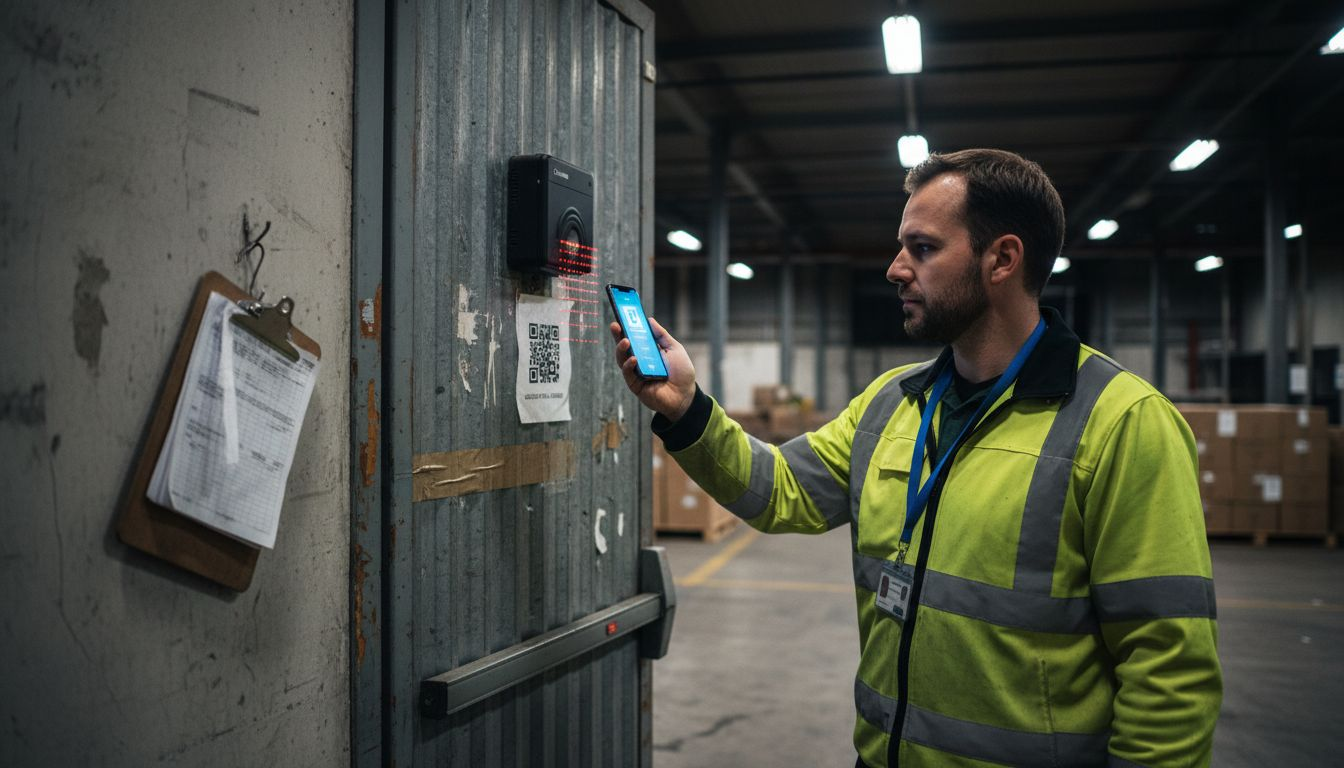
The core strength of QR code security lies in its complex encoding capabilities. Advanced anti-counterfeiting models like the DMF-Net utilize dual-branch multi-scale feature fusion networks to identify subtle forgery attempts and unauthorized reproductions, making QR codes significantly more challenging to replicate or manipulate compared to conventional identification systems. This technological approach allows for intricate security features that can detect even microscopic variations during the copying process.
Secure access through QR codes operates through several sophisticated mechanisms:
- Generating unique, encrypted matrix patterns
- Embedding multiple layers of authentication metadata
- Implementing dynamic verification protocols
- Creating time-sensitive access credentials
- Enabling complex cryptographic encoding techniques
The versatility of QR code authentication extends across multiple domains, including digital access control, physical entry systems, financial transactions, and sensitive information management. By integrating advanced encryption techniques with visual scanning technologies, these codes provide a seamless yet highly secure method of verifying identity and granting controlled access.
Pro Tip: Security Verification: Always verify QR code sources from trusted platforms and use multi-factor authentication methods to enhance overall security protocols.
Popular Applications for Artists and Businesses
QR codes have emerged as a transformative technology bridging creative expression and operational efficiency across diverse professional landscapes. Artists and businesses are discovering innovative ways to leverage these versatile digital tools, expanding their communication and engagement strategies far beyond traditional methods.
The ART-UP method demonstrates how QR codes can be aesthetically designed while maintaining robust scanning functionality, allowing professionals to create visually stunning codes that seamlessly blend artistic creativity with practical technology. This breakthrough enables artists to incorporate QR codes directly into artwork, marketing materials, and digital portfolios without sacrificing technical performance.
Businesses and artists are adopting QR codes across multiple applications:
- Portfolio and artwork documentation
- Interactive exhibition displays
- Digital business card exchanges
- Inventory and asset tracking
- Event registration and ticketing
- Product authentication and provenance tracking
- Multimedia content sharing
Practical implementations extend into specialized domains. Enhanced QR code systems now streamline attendance tracking and operational management for businesses and educational institutions, reducing manual errors and improving overall administrative efficiency. These technological solutions offer seamless integration between digital platforms and physical workflows.
Pro Tip: Design Strategy: Create visually appealing QR codes that match your brand aesthetic while ensuring high contrast and clear scanning capabilities to maximize user engagement.
Risks, Privacy, and Safety Concerns
QR codes, while incredibly convenient, have become a potential vector for sophisticated digital security threats that demand careful user awareness and proactive protection strategies. The seamless visual interface of these codes can mask significant privacy and safety risks that unsuspecting users might accidentally encounter.
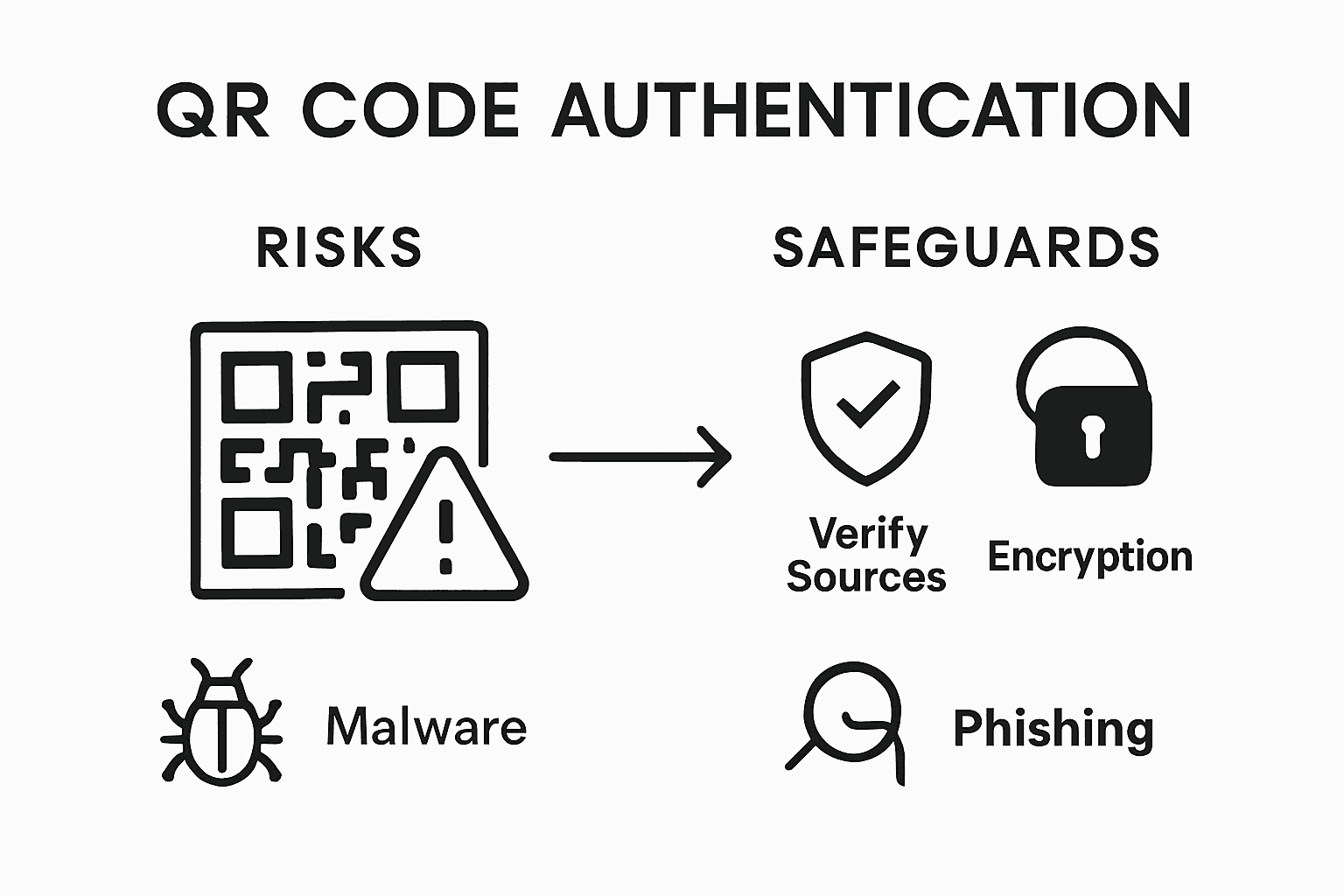
Quishing, a rapidly emerging cybersecurity threat, exploits the inherent trust and accessibility of QR codes to redirect users to fraudulent websites or trigger malicious malware downloads. These sophisticated attacks leverage the visual opacity and widespread acceptance of QR codes, creating deceptive pathways that can compromise personal and professional digital security.
Key privacy and safety risks associated with QR codes include:
- Unauthorized data collection
- Potential malware installation
- Phishing website redirects
- Location tracking
- Personal information exposure
- Network vulnerability
- Financial fraud attempts
Recent cybersecurity studies reveal a significant surge in malicious QR code attacks affecting millions globally, highlighting the critical need for vigilant scanning practices. Scammers increasingly exploit the convenience and user-friendly nature of QR codes, making it essential for individuals and organizations to develop robust verification protocols.
Pro Tip: Scanning Safety: Always verify QR code sources, use trusted scanning applications with built-in security checks, and avoid scanning codes from unknown or suspicious origins.
Below is a summary of privacy and safety risks related to QR codes and recommended prevention strategies:
| Risk Type | Typical Impact | Recommended Prevention |
|---|---|---|
| Malware threats | Device compromise, data theft | Use only trusted QR apps |
| Phishing sites | Credential or data loss | Verify site legitimacy before action |
| Unauthorized data collection | Privacy violations | Limit app permissions and scan sources |
Best Practices for Reliable QR Authentication
Reliable QR code authentication requires a comprehensive approach that integrates advanced technological safeguards, user awareness, and robust verification protocols. Organizations and individuals must develop multi-layered strategies to ensure the integrity and security of QR code interactions across various digital and physical environments.
An innovative academic document authentication system demonstrates best practices by combining QR codes with the Elliptic Curve Digital Signature Algorithm (ECDSA), providing a sophisticated method for protecting against forgery and ensuring document authenticity. This approach highlights the critical importance of implementing advanced cryptographic techniques to enhance QR code security.
Key best practices for reliable QR authentication include:
- Implement multi-factor verification processes
- Use advanced encryption algorithms
- Regularly update authentication protocols
- Integrate dynamic data verification
- Enable real-time scanning integrity checks
- Employ machine learning threat detection
- Create time-sensitive authentication tokens
Successful QR authentication strategies require continuous technological adaptation and user education. Organizations must develop comprehensive security frameworks that balance technological sophistication with user-friendly interfaces, ensuring both maximum protection and seamless user experience. This involves staying ahead of emerging threats, continuously refining authentication mechanisms, and maintaining transparent communication about security protocols.
Pro Tip: Security Protocol: Develop a consistent authentication strategy that combines technological solutions with ongoing user training and awareness programs.
Enhance Security and Simplicity with QR Code Solutions from Smack Tags
The article highlights the challenges and risks of securing QR code authentication from unauthorized access, malware, and phishing attacks. At the same time, it reveals the huge potential of QR codes to offer fast, dynamic, and versatile verification across many personal and business scenarios. If you want to take control of your QR code usage with reliable, durable, and easy-to-manage labels backed by advanced security concepts, Smack Tags offers the perfect solution.
Creative – Smack Tags provides a wide range of scannable QR code labels that let you protect and preserve your valuable assets with confidence. These labels are designed to be fade resistant, tear proof, and water resistant so you can securely attach videos, texts, and images to everything from artwork to important documents. You do not need any app to use them — just scan and access important information instantly while avoiding the common safety pitfalls outlined in the article.
Discover how easy it is to implement secure QR code authentication into your daily workflow or creative projects. Visit Smack Tags now to explore our innovative labels and subscription service. Take action today to safeguard your memories, assets, and business data with smart QR code solutions that combine simplicity with trusted security protocols.
Frequently Asked Questions
What is QR Code Authentication and how does it work?
QR Code Authentication is a digital security technique that uses unique, encrypted QR codes to verify identity and provide secure access to systems. It generates dynamic codes that contain specific authentication data, allowing for rapid and secure validation across various devices.
What are the advantages of QR Code Authentication over traditional methods?
Compared to traditional methods like passwords or physical tokens, QR Code Authentication enhances user experience with fast, scan-based access, offers advanced encryption for security, and is easily deployable across multiple devices, reducing risks associated with static codes.
What are the common applications of QR Code Authentication in businesses?
Businesses are using QR Code Authentication for various applications, including secure access control, event registration, product authentication, interactive exhibitions, digital business cards, and inventory tracking, allowing for more efficient workflows and user engagement.
What safety measures should be taken when using QR Codes?
To ensure safety when using QR Codes, always verify the source of the QR codes, use reputable scanning applications with security features, avoid scanning codes from unknown origins, and implement multi-factor authentication to enhance overall security.