
7 Smart Types of Storage Labels for Artists and Crafters
Over eighty percent of american artists admit that poor organization costs them hours of creative time each week. The right labeling solutions can turn a chaotic studio into a space where inspiration flows and supplies are always within reach. From classic paper labels to high tech QR codes, this guide introduces strategies that help creative people sort, find, and protect their materials with ease.
Table of Contents
- 1. Traditional Paper Labels For Easy Categorization
- 2. Durable Plastic Labels For Long-Lasting Use
- 3. Chalkboard Labels For Reusable Flexibility
- 4. Magnetic Labels For Metal Storage Solutions
- 5. Color-Coded Stickers For Fast Visual Sorting
- 6. Qr Code Labels For Digital Inventory Access
- 7. Custom Printed Labels For Personal Touch
Quick Summary
| Key Insight | Explanation |
|---|---|
| 1. Use Archivally-Safe Paper Labels | Choose acid-free and lignin-free materials to ensure labels do not deteriorate or damage items over time. |
| 2. Opt for Durable Plastic Labels | Select high-quality plastic labels for long-lasting organization, especially in varied environmental conditions. |
| 3. Implement Chalkboard Labels for Flexibility | Use chalkboard labels to easily erase and rewrite information, adapting to changing projects without waste. |
| 4. Consider Magnetic Labels for Repositioning | Magnetic labels allow easy repositioning on metal surfaces, enabling adaptable organization for frequently changing layouts. |
| 5. Create Custom Printed Labels | Design personalized labels that reflect your artistic style, enhancing both organization and brand identity in your workspace. |
1. Traditional Paper Labels for Easy Categorization
Artists and crafters know the struggle of maintaining an organized workspace, and traditional paper labels remain a fundamental solution for quick and efficient categorization. These simple yet powerful tools help transform cluttered studio spaces into streamlined creative environments where every supply and material has its designated spot.
When creating paper labels, choose archival quality materials that protect your valuable items. As recommended by the Northeast Document Conservation Center, using acid-free and lignin-free paper prevents deterioration over time. This approach ensures your labels will not damage or compromise the items you are organizing.
To maximize effectiveness, consider these practical strategies for paper labeling:
- Use waterproof markers or archival pens for clear, long-lasting text
- Select adhesives that are stable and reversible, such as starch paste
- Write information clearly and legibly
- Include specific details like contents, date of creation, or project name
Paper labels work exceptionally well for organizing art supplies, craft materials, sketchbooks, and storage containers. By investing a few minutes in thoughtful labeling, you create a system that saves hours of searching and reduces studio chaos. Your future self will thank you for the organizational clarity.
2. Durable Plastic Labels for Long-Lasting Use
For artists and crafters seeking storage solutions that withstand the test of time, durable plastic labels offer exceptional reliability and resilience. These robust labels provide a professional and permanent method for organizing creative spaces, ensuring your materials remain clearly identified under various environmental conditions.
According to Archford, high-quality adhesive labels with protective coatings can shield against extreme temperatures, UV light, and chemical exposure. This makes plastic labels an ideal choice for studio environments where art supplies might encounter varied conditions.
When selecting plastic labels for your creative workspace, consider these key characteristics:
- Choose labels with strong adhesive properties
- Select materials resistant to moisture and fading
- Opt for labels that can withstand temperature fluctuations
- Look for options with clear writing surfaces
Material Selection Matters. The Healthcare Plastics Recycling Council recommends using polymer-based labels that are compatible with recycling processes. By choosing labels that match your storage containers substrate, you not only ensure durability but also contribute to more sustainable organizational practices.
Plastic labels excel in workshops, studios, and craft rooms where traditional paper labels might deteriorate quickly. Their ability to remain legible and intact makes them a smart investment for artists who value long-term organization and presentation of their creative materials.
3. Chalkboard Labels for Reusable Flexibility
Creative professionals know the frustration of constantly relabeling storage containers as projects evolve and materials shift. Chalkboard labels offer an ingenious solution that allows artists and crafters to update their organization system with remarkable ease and zero waste.
These versatile labels provide ultimate flexibility for dynamic studio environments. The Healthcare Plastics Recycling Council suggests exploring alternative labeling methods that reduce material consumption, making chalkboard labels an environmentally conscious choice for organized creators.
Key Advantages of Chalkboard Labels:
- Easily erase and rewrite without replacing labels
- Suitable for multiple storage types
- Cost effective long term solution
- Environmentally friendly alternative to disposable labels
According to the Society for the Preservation of Natural History Collections, coated papers that can be written and erased repeatedly offer similar benefits to chalkboard labels. However, artists should be mindful of potential material degradation over extended periods.
When implementing chalkboard labels, select high quality chalk markers that write smoothly and wipe clean without residue. Pair these labels with clear storage containers to create a professional and adaptable organizational system that can grow and change alongside your creative projects.
4. Magnetic Labels for Metal Storage Solutions
Artists and crafters with metal storage units understand the challenge of keeping labels secure and easily readable. Magnetic labels offer an innovative solution that combines flexibility, durability, and instant repositioning for creative workspace organization.
Archford emphasizes the critical importance of selecting label materials that adhere well to various surfaces, particularly metal storage systems. High quality magnetic labels provide a unique advantage by allowing instant repositioning without damaging the underlying surface.
Key Benefits of Magnetic Labels:
- Zero permanent adhesive residue
- Simple repositioning without damage
- Works with metal shelving and cabinets
- Ideal for frequently changing studio layouts
When implementing magnetic labels, consider the strength of the magnet and the weight of items you are organizing. According to Label Warehouse, proper handling and storage of labels ensures their long-term adhesive properties and overall quality.
Magnetic labels shine in workshops where creativity demands constant reorganization. Whether youre managing art supplies, craft materials, or studio equipment, these versatile labels provide a professional and adaptable organizational system that moves as quickly as your imagination.
5. Color-Coded Stickers for Fast Visual Sorting
For artists and crafters drowning in a sea of supplies, color-coded stickers offer a visual lifeline to instant organization. These simple yet powerful labels transform chaotic workspaces into streamlined creative environments where every material has its perfect place.
The Healthcare Plastics Recycling Council highlights the strategic importance of color-coded labels for quick identification and sorting, emphasizing their role in efficient organization and sustainability.
Effective Color-Coding Strategies:
- Assign specific colors to different material categories
- Create a consistent color legend for your workspace
- Use bright contrasting colors for easy visibility
- Match colors to natural material groupings
Archford recommends using durable materials and strong adhesives to ensure your color-coded system remains intact and legible. This approach transforms your studio from a cluttered workspace into an intuitive organizational masterpiece.
Implement your color-coded system strategically. Consider using warm tones for painting supplies, cool blues for digital tools, and earthy greens for natural materials. With a well-designed color scheme, you can navigate your creative space at a glance, saving precious time and mental energy for your artistic pursuits.
6. QR Code Labels for Digital Inventory Access
In the age of digital creativity, QR code labels transform how artists and crafters manage their valuable supplies and track intricate project details. These smart labels bridge the physical and digital worlds, offering instant access to comprehensive information with a simple smartphone scan.
Research on packaging research artifacts demonstrates how QR codes can link physical items to their digital records, facilitating easy access to detailed information and dramatically improving inventory management practices.
QR Code Label Advantages:
- Store unlimited digital information
- Instantly accessible from any smart device
- Track project history and details
- Create a comprehensive digital archive
A groundbreaking study on blockchain based supply chain traceability highlights how QR codes enhance transparency and efficiency by providing quick access to product information. For artists, this means creating a digital ecosystem around your physical creative materials.
Implement QR code labels strategically. Attach them to storage containers, individual art supplies, or project boxes. Each scan can reveal project notes, purchase dates, material specifications, or even linked tutorial videos. Your studio becomes a smart, interconnected space where every item tells a rich, digital story.
7. Custom Printed Labels for Personal Touch
Artists and crafters know that organization is an art form in itself. Custom printed labels transform mundane storage systems into personalized creative spaces that reflect your unique artistic identity and workflow.
Archford emphasizes how personalized labels can enhance brand identity and provide clear specific information tailored to individual requirements. For creative professionals, this means designing labels that are both functional and an extension of your artistic expression.
Custom Label Design Strategies:
- Match label design to your studio aesthetic
- Include personal branding elements
- Use consistent color schemes
- Incorporate creative typography
Whether you are a painter, sculptor, or digital artist, custom printed labels allow you to tell a story beyond simple categorization. These labels can include project names, creation dates, material details, or even small sketches that make your organizational system uniquely yours.
Consider investing in a quality label printer or working with a professional printing service to create labels that are not just identifiers but small works of art themselves. Your storage system becomes a curated reflection of your creative journey.
Below is a comprehensive table summarizing the various labeling solutions discussed for artists and crafters to organize their workspaces efficiently.
| Label Type | Key Features | Best For |
|---|---|---|
| Paper Labels | Acid-free, lignin-free, archival quality, reversible adhesives, use of waterproof markers | Organizing art supplies and storage containers |
| Plastic Labels | Strong adhesive, UV resistant, moisture and temperature resistant, recyclable | Studios with varied environmental conditions |
| Chalkboard Labels | Reusable, erasable, environmentally friendly, cost effective | Dynamic organizations with shifting projects |
| Magnetic Labels | Instant repositioning, zero adhesive residue, suitable for metal surfaces | Metal storage systems and flexible layout needs |
| Color-Coded Stickers | Visual sorting, specific color assignments, durable materials | Quick identification and efficient organization |
| QR Code Labels | Digital information storage, smartphone accessible, tracks project details | Digital inventory management and project tracking |
| Custom Printed Labels | Personal branding, studio aesthetic matching, creative design | Personalized and artistic organization systems |
Elevate Your Studio Organization with Smart QR Code Labels
Artists and crafters often struggle with maintaining an organized and adaptable creative space amid changing projects and materials. This article highlights the importance of flexible and durable labeling solutions that keep your art supplies accessible and well-categorized. Achieving clear identification with minimal effort helps you save time and reduce frustration as you work on your creative projects.
If you are looking for a smart, reusable, and high-tech way to manage your storage labels consider exploring our Creative – Smack Tags collection. Our QR code labels offer not just a label but a digital extension for every item in your workspace. Easily update information without replacing physical labels and attach videos, images, or notes to your labels. They are durable and water-resistant ensuring your organizational system stays intact even in busy studios.
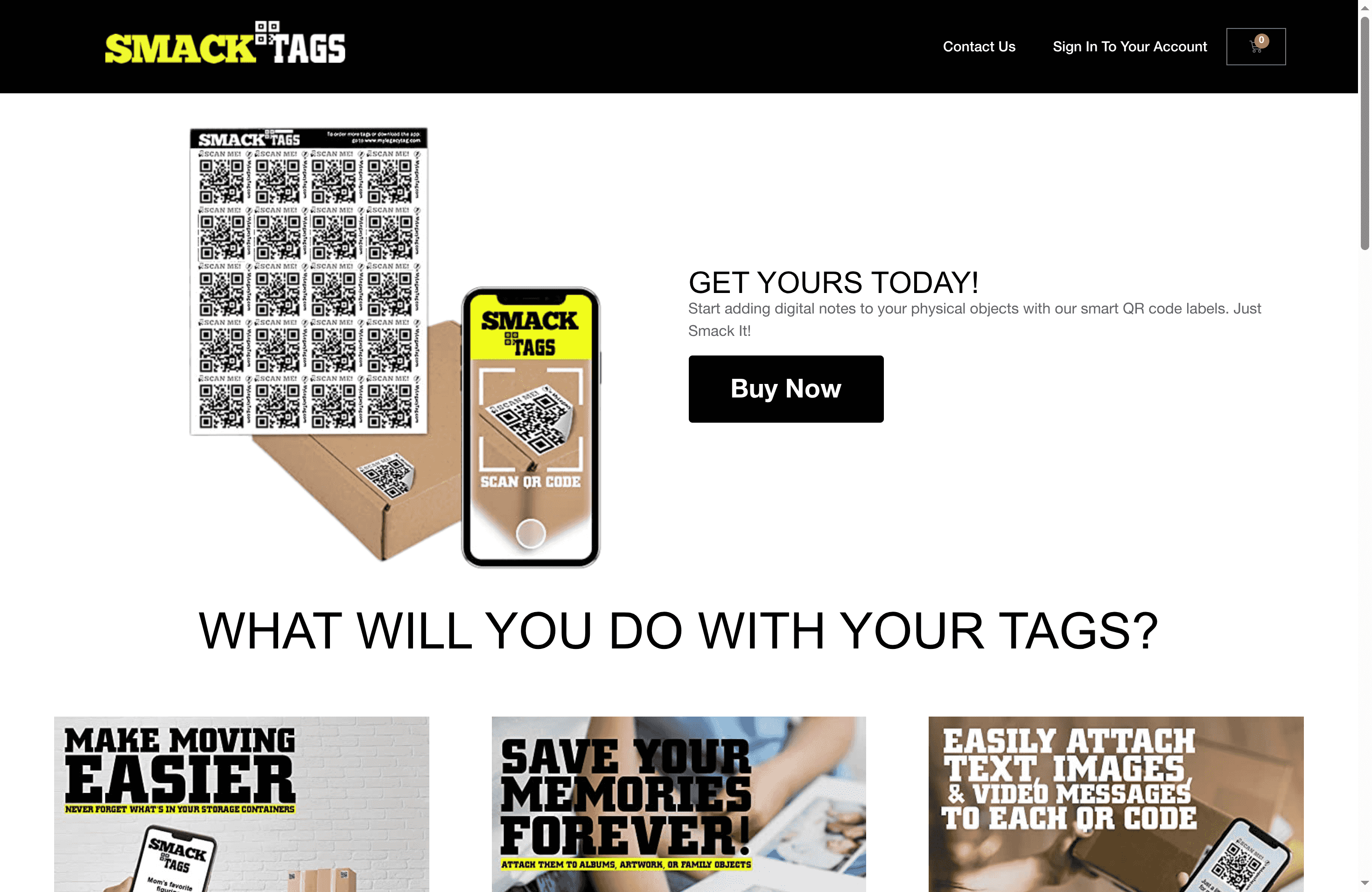
Transform your organization now with QR code labels that make accessing inventory details simple and fast. Visit Smack Tags today and experience how combining physical labeling with digital convenience can revolutionize your art and craft storage. Start creating a smarter and more inspiring workspace with personalized labeling solutions that grow with your creativity.
Frequently Asked Questions
What are the benefits of using traditional paper labels in my craft space?
Traditional paper labels are excellent for quick categorization and organization of art supplies. By using high-quality, acid-free materials, you can ensure that these labels last without damaging your items, creating an efficient system that saves time.
How can I make my plastic labels last longer in a creative environment?
To ensure your plastic labels stand the test of time, choose high-quality adhesives and materials resistant to moisture, fading, and temperature fluctuations. Regularly inspect and clean your labels to maintain their legibility and effectiveness, especially in dynamic studio settings.
What are the advantages of using chalkboard labels instead of traditional labels?
Chalkboard labels offer reusable flexibility, allowing you to easily erase and rewrite content as your projects evolve. This not only reduces waste but also allows you to adapt your organization system without needing to replace labels, making it a cost-effective choice.
How can I effectively implement a color-coded sticker system in my workspace?
To effectively implement a color-coded sticker system, assign specific colors for different materials and create a legend for quick reference. By consistently using bright and contrasting colors, you can make it easy to identify supplies at a glance and reduce organization time by up to 20%.
What steps should I take to set up magnetic labels for my metal storage?
When using magnetic labels, ensure the magnets have sufficient strength to hold securely to your metal storage units. Regularly check their placement and adjust as needed to keep your workspace organized without damaging any surfaces.
How can QR code labels enhance my inventory management as an artist?
QR code labels enhance inventory management by linking physical items to digital records, providing instant access to detailed project information via a smartphone scan. Incorporate these labels on storage containers to efficiently track project history and material specifications while minimizing manual record-keeping.