
Why Use QR Codes for Events: Complete Guide
Over 80 percent of event organizers now use QR codes to speed up check-ins and manage crowds with ease. The need for simple, secure, and interactive solutions has pushed QR codes to the forefront of modern event management. Whether you run music festivals, conferences, or sporting events, understanding how QR codes streamline operations and improve guest experiences can make all the difference in hosting smooth, memorable events.
Table of Contents
- QR Codes Explained For Event Management
- Popular Event Applications And Use Cases
- How QR Codes Streamline Event Access
- Ensuring Security And Reliable Data Safety
- Cost Benefits Versus Traditional Event Methods
- Common QR Code Mistakes To Avoid
Key Takeaways
| Point | Details |
|---|---|
| Efficiency in Event Management | QR codes streamline ticketing and check-in processes, significantly reducing wait times and enhancing attendee experience. |
| Enhanced Security | Implementing robust security measures, including encryption and access controls, protects sensitive information and prevents unauthorized entry. |
| Cost-Effectiveness | QR codes eliminate printing and manual verification costs, allowing for substantial savings and more efficient resource allocation. |
| Engagement Opportunities | QR codes facilitate real-time attendee engagement and post-event interactions, extending the event’s lifecycle and optimizing follow-up strategies. |
QR Codes Explained For Event Management
QR codes have revolutionized event management, providing seamless solutions for ticketing, check-in, and attendee engagement. According to research from ijarsct, these dynamic digital codes streamline event verification processes and significantly reduce wait times at entry points.
In modern event management, QR codes serve multiple strategic functions. ijthm highlights their versatility in mobile ticketing, event advertising, and creating interactive experiences. Event organizers can leverage these codes for:
- Contactless event entry
- Digital ticket verification
- Interactive event information sharing
- Real-time attendee tracking
- Simplified registration processes
By generating unique QR codes for each attendee, event managers transform traditional administrative tasks into efficient, technology-driven experiences. These codes can store critical information like ticket details, seating assignments, and personal event preferences, enabling smoother, more personalized event management. The technology not only enhances operational efficiency but also provides attendees with a modern, hassle-free engagement method.
Moreover, QR codes open exciting possibilities for post-event interactions. Organizers can embed links to event galleries, feedback forms, or future event promotions directly within the QR code, extending the event’s lifecycle and maintaining audience connection long after the initial experience concludes.
Popular Event Applications And Use Cases
QR codes have dramatically transformed event management across multiple domains, offering innovative solutions for diverse event types. According to research from ijarsct, these digital tools can overcome traditional interactive method limitations, particularly in organizational settings like student events.
Event registration represents one of the most popular applications for QR codes. Different event categories leverage these versatile technologies in unique ways:
- Academic Conferences: Digital check-ins and attendee tracking
- Music Festivals: Contactless ticket validation and access control
- Corporate Seminars: Networking through digital business card exchanges
- Educational Events: Streamlined student identification and attendance systems
- Sports Events: Secure entry management and fan engagement
The integration of QR codes enables event organizers to create more sophisticated, data-driven experiences. By scanning a single code, attendees can access event schedules, speaker information, interactive maps, and even participate in real-time polls or surveys. This technology transforms passive event participation into an engaging, interactive journey.

Moreover, QR codes provide robust solutions for post-event analytics and engagement. Event managers can track attendance, gather immediate feedback, and create personalized follow-up communications. The ability to capture detailed interaction data allows for more targeted future event planning and marketing strategies, making QR codes an indispensable tool in modern event management.
How QR Codes Streamline Event Access
QR codes have become a game-changing technology for simplifying event entry and management. According to research from ijarsct, creating unique QR code tickets enables a seamless verification process that dramatically reduces wait times at entry points, meeting the modern attendee’s desire for hassle-free, mobile-accessible experiences.
Event access management has been revolutionized through these digital tools. Key advantages of QR code implementation include:
- Instant ticket verification
- Reduced manual check-in processes
- Elimination of physical ticket handling
- Real-time attendance tracking
- Enhanced security through unique digital identifiers
The technological simplicity of QR codes allows event organizers to transform traditional entry procedures. By generating personalized QR codes for each participant, venues can process large crowds efficiently, minimizing congestion and creating a smooth, welcoming entry experience. This approach not only saves time but also provides a modern, tech-forward impression of the event.
Moreover, QR codes offer robust security features that traditional paper tickets cannot match. Each digital ticket can be encrypted, tracked, and instantly validated, preventing fraudulent entry and providing event managers with comprehensive attendance data. For attendees, the convenience of having a digital ticket stored directly on their smartphone eliminates the stress of potentially losing a physical ticket, making the entire event access process more convenient and user-friendly.
Ensuring Security And Reliable Data Safety
QR code security has become a critical concern in modern digital interactions, particularly for event management. According to arxiv, innovative methods like QRïS are emerging to classify and prevent potential security threats through comprehensive structural analysis of QR codes, helping organizations proactively identify and mitigate risks.
Data protection involves multiple strategic approaches for QR code implementation:
- Encryption of embedded information
- Limited data exposure
- Temporary access tokens
- Multi-factor authentication
- Regular security audits
As highlighted by securitysenses, trackable QR codes offer significant benefits but also pose potential risks like data theft and malware infections. Event organizers must implement robust security measures to protect sensitive attendee information and prevent unauthorized access.
Additionally, best practices for QR code security include using dynamic QR codes that can be deactivated instantly, implementing strict access controls, and regularly updating security protocols. By combining technological safeguards with strategic management, event organizers can create a secure digital environment that protects both organizational and attendee interests while maintaining the convenience and efficiency that QR codes provide.
Cost Benefits Versus Traditional Event Methods
QR codes have emerged as a cost-effective alternative to traditional event management strategies. According to research from ijarsct, these digital solutions significantly reduce expenses by eliminating the need for physical tickets and manual verification processes, while simultaneously meeting modern attendees’ preferences for mobile accessibility.
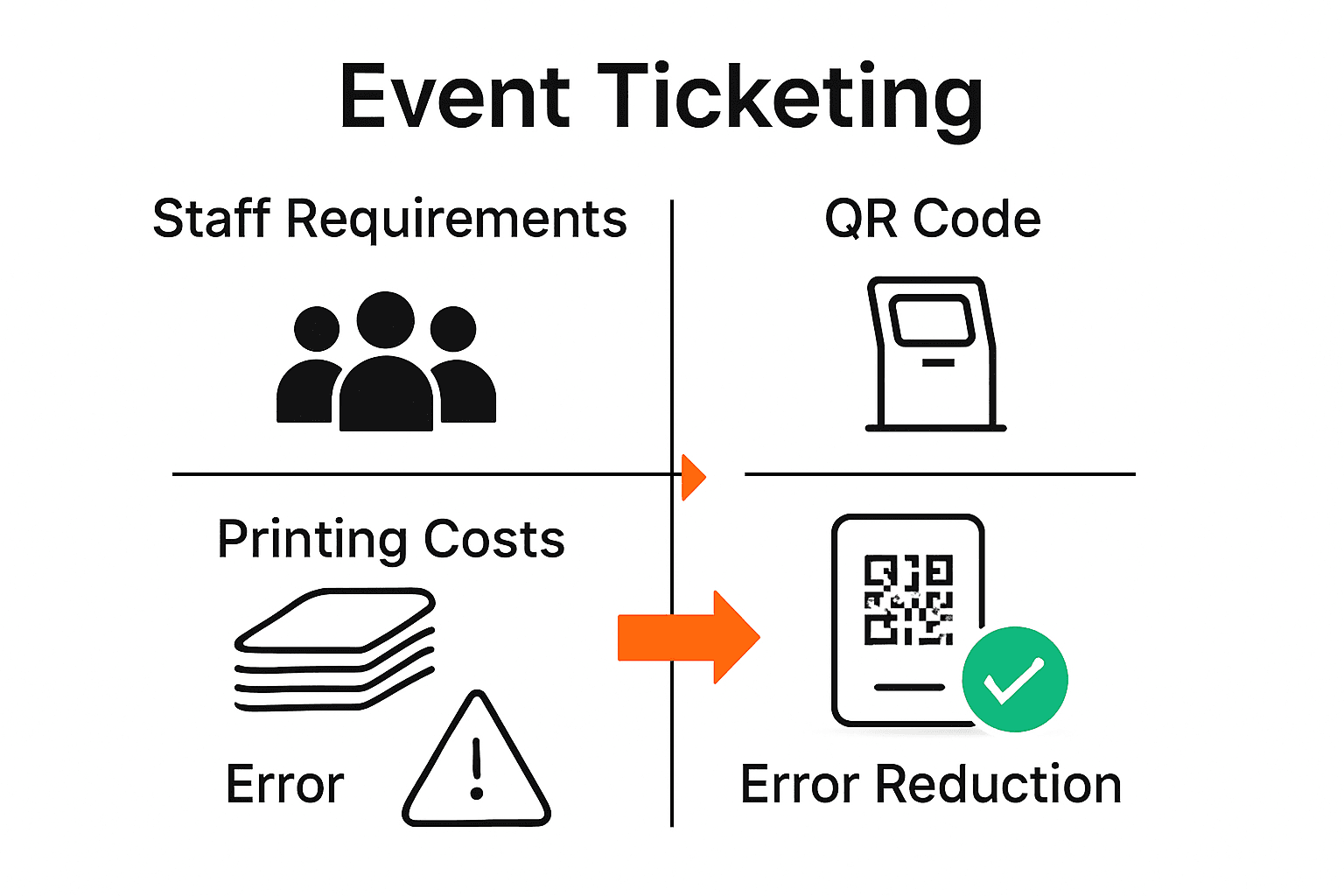
Cost comparison between traditional and QR code-based event methods reveals substantial financial advantages:
-
Printing Costs
- Traditional: Expensive paper tickets
- QR Codes: Digital tickets with zero printing expenses
-
Staff Requirements
- Traditional: Multiple personnel for ticket checking
- QR Codes: Minimal staff, automated verification
-
Error Reduction
- Traditional: High manual processing errors
- QR Codes: Automated, precise entry management
Organizers can realize significant savings through digital transformation. By replacing paper-based systems with QR code technologies, events can reduce overhead costs, minimize human error, and create more streamlined, efficient entry processes. The technology not only cuts expenses but also provides a more sophisticated, tech-forward attendee experience that appeals to modern event participants.
Furthermore, the long-term financial benefits extend beyond immediate cost savings. QR codes enable detailed analytics, allowing event managers to track attendance, understand participant behavior, and make data-driven decisions that can optimize future event planning and marketing strategies. This approach transforms event management from a cost center to a strategic, insight-generating function.
Common QR Code Mistakes To Avoid
Navigating the world of QR codes requires understanding potential pitfalls that can compromise security and effectiveness. According to securitysenses, improperly secured QR codes can be vulnerable to data theft, malware infections, and unauthorized access, making proactive risk management crucial.
Common QR code implementation mistakes include:
-
Insufficient Security Protocols
- Lack of encryption
- Unprotected data links
- No access restrictions
-
Poor QR Code Design
- Low contrast and readability
- Overcrowded information
- Inconsistent sizing
-
Inadequate User Education
- No warning about potential risks
- Lack of scanning guidelines
- Missing security context
Research from arxiv emphasizes the critical need for preemptive detection of potential security threats through comprehensive structural analysis. Event organizers must implement robust screening mechanisms to prevent cybercriminals from exploiting QR code vulnerabilities.
Ultimately, successful QR code implementation requires a holistic approach that balances technological security with user awareness. By anticipating potential risks, providing clear guidelines, and continuously updating security protocols, organizations can leverage QR codes effectively while protecting both their interests and those of their event participants.
Unlock Seamless Event Experiences with Smart QR Code Solutions
Managing events today means overcoming challenges like long check-in lines, ensuring secure ticket verification, and engaging attendees effortlessly. The article emphasizes how QR codes streamline entry, boost security, and create interactive experiences that today’s audiences expect. Why settle for traditional methods when you can transform event management with technology designed for simplicity, reliability, and personalization?
Discover how Creative – Smack Tags offers durable, fade-resistant QR code labels that are perfect for ticketing, registration, and sharing important event details without the hassle of apps or paper. Our smart labels allow you to digitally store videos, images, text, and more, offering your attendees a rich, seamless experience.

Take control of your next event with solutions that save time and cut costs while enhancing security and attendee engagement. Visit Smack Tags now to explore how easy it is to upgrade your event management method. For a quick start, you can also browse Uncategorized – Smack Tags for versatile QR code label options designed to fit any event need. Don’t wait until your next event to discover the power of smart labeling—upgrade today and deliver memorable, hassle-free experiences.
Frequently Asked Questions
What are QR codes and how do they work for events?
QR codes (Quick Response codes) are two-dimensional barcodes that store data, allowing for quick access to information when scanned with a smartphone. They are used in events for ticketing, check-in, interactive experiences, and attendee engagement.
How do QR codes improve event registration and access management?
QR codes streamline event registration by enabling contactless ticket validation and real-time attendance tracking. They eliminate physical ticket handling, reduce wait times, and facilitate a smoother check-in process for attendees.
What are the security measures needed for using QR codes at events?
To ensure security, QR codes should have encrypted information, limited data exposure, and strict access control. It is essential to use dynamic QR codes that can be deactivated and to regularly update security protocols to protect against data theft and unauthorized access.
What are the cost benefits of using QR codes instead of traditional event methods?
Using QR codes significantly reduces costs associated with printing physical tickets and requires fewer staff for manual verification. The technology minimizes human error and operational expenses, transforming event management into a more efficient and cost-effective process.